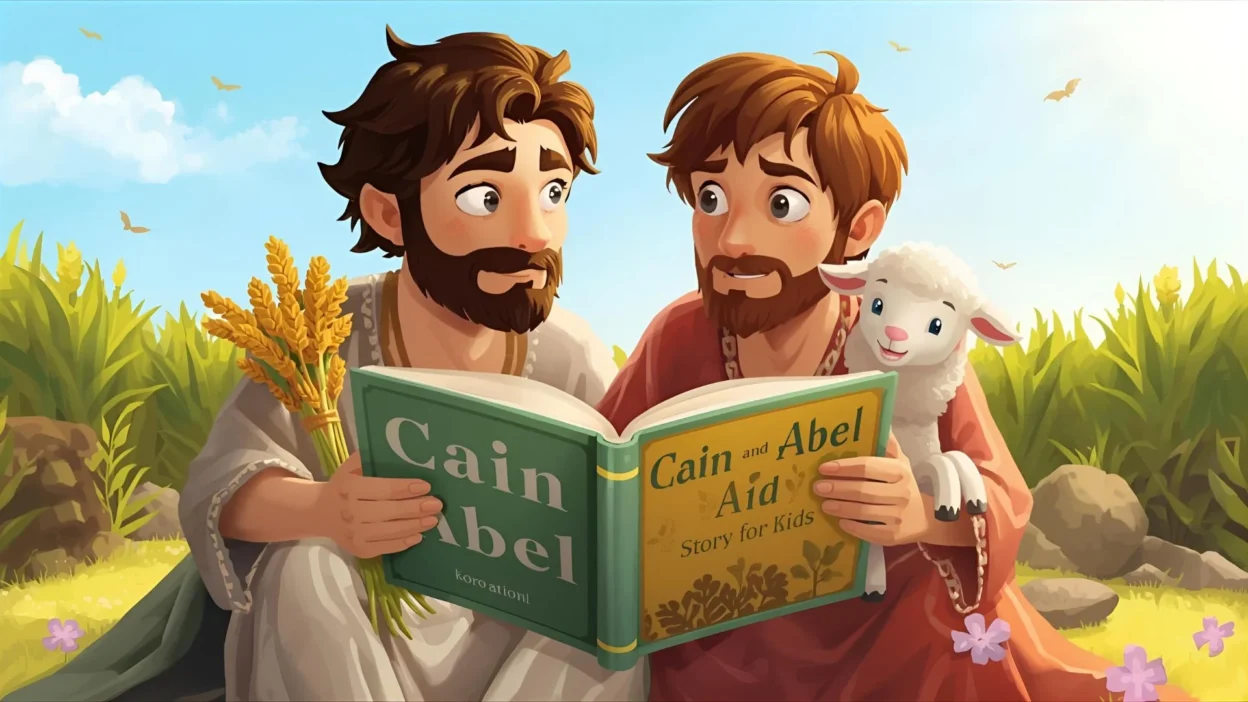
The Cain and Abel story for kids is one of the most powerful and timeless tales from the Bible. For adults looking to teach values, this story is hot, trending, and one of the best ways to explore topics like jealousy, kindness, forgiveness, and responsibility in 2025.
Whether you want the Cain and Abel story with pictures, a quick Cain and Abel story summary, or inspiration for Sunday school lessons and crafts, these stories are adapted to be simple yet meaningful. Perfect for parents, teachers, and anyone interested in the story of Cain and Abel in the Bible, each one delivers deep lessons in a way children can understand while adults can reflect on.
Story 1 – The Brothers’ First Gift
Cain and Abel were the first two sons of Adam and Eve. Cain was a farmer who grew crops, and Abel was a shepherd who cared for sheep. One day, both brothers decided to give an offering to God. Cain brought fruits from his harvest, while Abel brought the best lamb from his flock.
God was pleased with Abel’s offering because it was given with love and sincerity. But He did not accept Cain’s gift, as Cain gave it with jealousy in his heart. Cain felt angry and sad, and his face darkened with envy.
God spoke to Cain gently, warning him: “If you do what is right, you will be accepted. But if you let anger control you, sin will take over.” Cain did not listen. Instead, he let his anger grow like a storm.
One day, Cain invited Abel to walk with him in the field. As they walked, Cain’s jealousy boiled over, and he struck his brother down. Abel’s life ended that day, and Cain’s heart was filled with regret.
When God asked, “Where is your brother Abel?” Cain replied, “Am I my brother’s keeper?” But God already knew what had happened. Cain was punished, sent to wander the earth as a restless soul.
Though Cain lived, his heart carried sorrow forever. From this story, both children and adults learn the importance of kindness, honesty, and pure intentions when giving.
Moral: A gift given with love and sincerity is always more valuable than one given with pride or envy.
Story 2 – The Warning Unheard
Cain often compared himself to Abel. Abel was kind, gentle, and humble, while Cain sometimes struggled with selfishness. When they both brought offerings to God, Abel’s was accepted because it came from his heart. Cain’s offering, though outwardly good, lacked true devotion.
Jealousy began to eat at Cain. He thought about how Abel always seemed favored, and the more he thought, the angrier he became. God noticed Cain’s troubled heart and gave him a loving warning: “Sin is waiting to control you, but you must master it.”
These words were like a light, guiding Cain toward a better path. But Cain turned away from that light. He let envy take over instead of choosing forgiveness and growth.
One afternoon, Cain and Abel went out to the fields together. As the sun shone, Cain’s jealousy reached its peak. Instead of loving his brother, he struck Abel down. The earth cried out with Abel’s blood, and Cain was left trembling with guilt.
God confronted Cain: “What have you done? Your brother’s blood cries to me from the ground.” Cain’s punishment was to live as a wanderer, always longing for peace but never finding it.
This story reminds us that jealousy can cloud judgment and destroy love if we let it grow unchecked.
Moral: Ignoring wise warnings can lead to regret; mastering emotions leads to peace.
Story 3 – A Tale of Choices
Cain and Abel both had choices in front of them. Abel chose honesty, giving his best to God. Cain, however, chose half-heartedness, holding back and offering without care. When God accepted Abel’s gift but rejected Cain’s, Cain became furious.
Instead of reflecting on his mistake, Cain compared himself to Abel. His pride was hurt, and instead of working harder, he let resentment grow. God reminded him that he had the power to make better choices: “If you do well, will you not be accepted?”
But Cain didn’t want to change. His jealousy led him to lure Abel into the fields. There, Cain made a choice he could never undo—he attacked Abel. Abel’s innocent life ended, and Cain’s choice brought suffering on himself.
God punished Cain, but also showed mercy by protecting him from harm. Cain carried his guilt forever, knowing he could have chosen differently.
This story teaches us that life is shaped by our decisions, and jealousy can lead to destructive paths if we don’t control it.
Moral: Our choices define our destiny—choose love over jealousy, and kindness over anger.
Story 4 – The Seeds of Jealousy
Cain worked hard in his fields, plowing the soil and growing crops. Abel, his younger brother, cared lovingly for his sheep. Both had gifts to offer, yet their hearts were different. Abel always gave the best of what he had, while Cain gave only some of his harvest, keeping the best for himself.
When God accepted Abel’s gift but not Cain’s, Cain felt a burning jealousy rise inside him. Instead of learning from Abel’s example, Cain’s envy grew like weeds choking a healthy plant.
God saw Cain’s troubled heart and tried to help him. “If you do good, you will be accepted. But if you do wrong, sin waits at your door,” He said. It was a chance for Cain to turn back, to change his ways.
But Cain chose not to listen. His jealousy became anger, and his anger turned into hatred. One day, in the quiet of the fields, Cain’s envy boiled over. He struck Abel down, ending his brother’s life.
When God asked, “Where is your brother Abel?” Cain tried to hide the truth. But God knew everything. The earth itself cried out with Abel’s blood. As punishment, Cain was sent to wander, never again at peace.
This retelling shows how jealousy can grow like bad seeds if we don’t pull it out early.
Moral: Jealousy starts small but can destroy lives if not controlled.
Story 5 – The Keeper’s Question
Cain and Abel lived side by side, each with their own work. Abel’s sheep were healthy and strong because of his gentle care. Cain’s fields produced fruit and grain, but his heart was often restless.
When the time came for offerings, Abel brought his very best lamb, while Cain gave an ordinary part of his crops. God accepted Abel’s gift, but Cain’s was rejected. Rage filled Cain’s heart.
God reached out to Cain with words of wisdom: “Be careful. If you do what is right, you will be accepted. But sin is near.” Cain ignored the warning. Instead, he invited Abel into the fields. There, his anger spilled over, and he attacked his brother.
Afterward, when God asked, “Where is Abel, your brother?” Cain answered, “Am I my brother’s keeper?” This question has echoed through generations, reminding us of responsibility toward one another.
Cain was punished, marked to wander the earth, never finding peace. His greatest burden was knowing that he had failed his role as a brother.
The story teaches us that we are all “keepers” of one another, responsible for showing love and protection.
Moral: We are responsible for caring for one another—love is stronger than envy.
Story 6 – Love Lost, Lesson Learned
Cain and Abel grew up together, playing as children, laughing, and learning. But as they grew older, their paths divided. Abel’s heart stayed soft, always giving his best, while Cain’s heart became proud and heavy.
When the day of offering came, Abel carefully chose his healthiest lamb, while Cain casually gathered crops. God accepted Abel’s gift, but Cain’s was turned away. The rejection stung.
Instead of changing, Cain let anger grow. He felt humiliated, comparing himself to Abel. God reminded him that he could still do right, but Cain chose not to listen.
One afternoon, Cain invited Abel into the fields. As Abel walked beside him, Cain’s heart filled with bitterness. In a moment of rage, he struck down his brother. The world became quieter without Abel’s laughter.
God’s voice thundered: “What have you done?” The earth had absorbed Abel’s blood, crying for justice. Cain was punished to wander restlessly, his life marked by guilt. Yet even in punishment, God showed mercy, protecting him from harm.
Though tragic, the story teaches both children and adults that anger and jealousy never lead to peace, but love always does.
Moral: Anger destroys, but love heals and gives life.
Story 7 – The Cry of the Ground
Cain tilled the soil while Abel cared for sheep. When the day came to present offerings, Abel chose his finest lamb, while Cain brought ordinary crops. God accepted Abel’s gift but rejected Cain’s.
Cain’s jealousy grew into deep anger. God spoke gently: “If you do well, will you not be accepted? But if you let anger rule, sin will take over.” Instead of calming down, Cain invited Abel to the field. There, in a fit of rage, Cain struck his brother.
Abel’s blood touched the ground, and God declared, “Your brother’s blood cries to me.” The earth itself bore witness. Cain tried to hide, but God’s justice was sure. His punishment was to wander forever, carrying guilt like a heavy burden.
Still, God placed a mark of protection on him, ensuring no one would kill him. Cain lived, but without peace.
Moral: Our actions leave lasting marks—choose peace before anger turns to harm.
Story 8 – The First Lesson of Responsibility
Cain and Abel grew up learning from their parents, Adam and Eve. Both knew the importance of honoring God. Abel offered his best lamb, while Cain chose to give less than his best.
God accepted Abel’s offering. Cain’s was rejected. This hurt Cain’s pride. Instead of correcting his mistake, he compared himself to Abel.
God reminded him, “You can still do right. Do not let sin control you.” Cain ignored the warning. In the fields, jealousy consumed him, and he struck Abel.
When questioned, Cain replied, “Am I my brother’s keeper?” This answer showed not only guilt but also denial of responsibility. Cain’s punishment was to become a wanderer, marked but protected.
The story reminds us that each person is a “keeper” of others. We are called to love, support, and protect.
Moral: We are responsible for each other’s well-being.
Story 9 – The Choice Between Good and Evil
Every day brings choices. Cain and Abel faced such choices when giving to God. Abel gave his best with love. Cain gave without care. Abel’s gift was accepted, Cain’s was not.
Instead of learning, Cain compared himself with Abel. His envy grew. God warned him, “If you do well, you will be accepted.” Cain ignored this and made a fateful choice.
In the field, Cain’s jealousy became action. He struck Abel down. That choice could never be undone.
God’s voice came: “Your brother’s blood cries from the ground.” Cain was punished, doomed to wander. Yet God spared his life, showing both justice and mercy.
The story reveals the power of choice—every action shapes destiny.
Moral: Every choice shapes our future—choose goodness over jealousy.
Story 10 – The Everlasting Lesson
Cain and Abel were brothers with different paths. Abel lived with kindness, offering his best. Cain lived with envy, giving without love.
God accepted Abel’s gift but not Cain’s. Envy darkened Cain’s heart. Even after God’s warning, Cain let anger take over.
In the fields, Cain’s rage became action. Abel fell, and Cain’s guilt began. When asked where Abel was, Cain denied responsibility. Yet God knew. Abel’s blood cried from the earth.
Cain’s punishment was heavy: endless wandering. But God marked him with protection, sparing him from death.
Generations later, the story is still told—not just as tragedy, but as a timeless reminder. It speaks of jealousy, choices, love, responsibility, and God’s justice.
Moral: Jealousy destroys, but love and responsibility build lasting peace.
Conclusion
The Cain and Abel story for kids is one of the top and most meaningful Bible stories retold for 2025. It is simple yet profound, showing how jealousy, anger, and bad choices can lead to pain, while love, kindness, and responsibility bring peace.
Whether shared through Cain and Abel Sunday school lessons, Cain and Abel activities for kids, or even as a Cain and Abel story with pictures, the lessons are clear. Adults can reflect on what is the main lesson of the Cain and Abel story, while children can enjoy these easy versions that double as teaching tools. This timeless Cain and Abel story summary continues to inspire, reminding us to be our “brother’s keeper” and to choose love over envy.