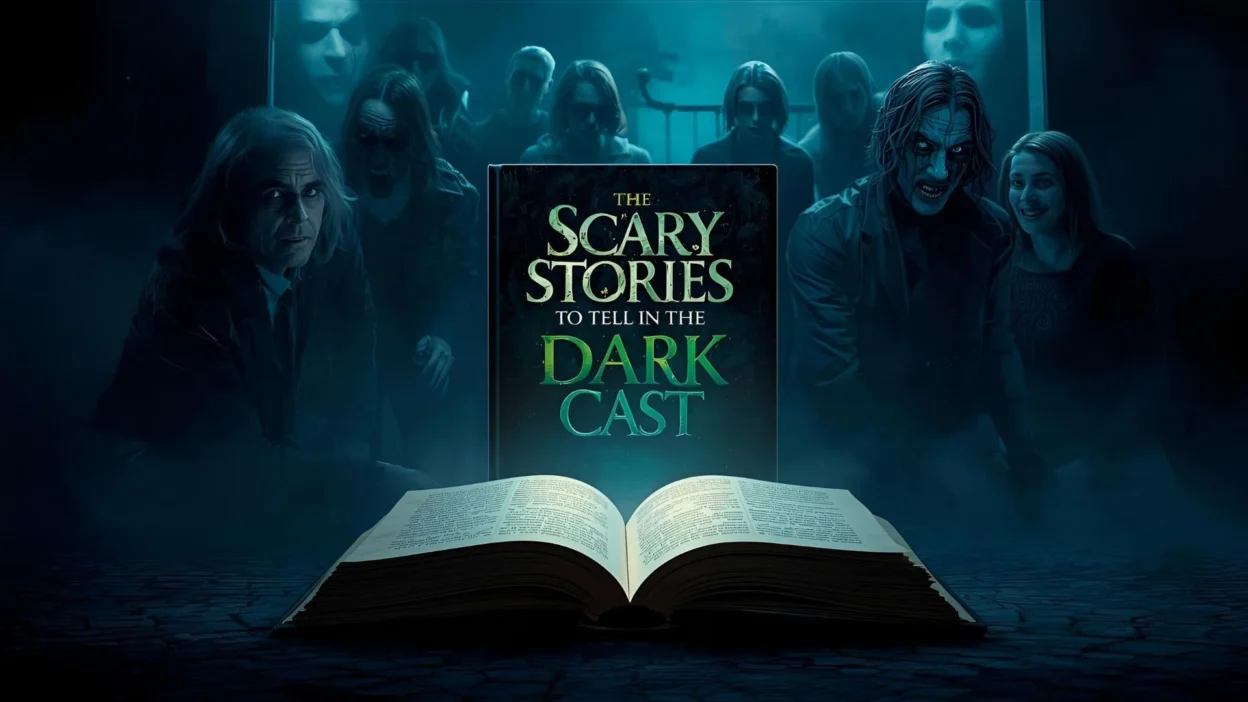
When it comes to scary stories to tell in the dark cast, audiences love revisiting the terrifying characters that bring nightmares to life. These tales blend fear, mystery, and a deep dive into the world of horror storytelling. Whether you’re a fan of the scary stories to tell in the dark movie cast or searching for modern horror story characters, these narratives are crafted to keep your heart pounding and your imagination running wild.
Below are the top three chilling stories inspired by the haunting spirit of the dark cast—crafted especially for adult readers who crave suspense, dread, and the thrill of the unknown.
Story 1: The Hollow Actor
Elliot Kane was once a famous face in the scary stories to tell in the dark movie cast. Known for his eerie stare and unsettling performances, his fame spiraled into obsession. After filming wrapped, he began hearing whispers in his dressing room—soft voices repeating his lines before he spoke them.
At first, Elliot dismissed it as exhaustion. But when mirrors in his trailer began fogging up with phrases like “It’s your turn now,” he felt something sinister creeping closer. His reflection stopped mimicking him one night—it smiled when he didn’t.
Desperate, he smashed every mirror, but the whispers followed. The more he ignored them, the louder they grew, echoing from his phone, the TV, even the walls. Then came the night when he woke up on set again—alone, cameras rolling, lights blinding, and a director’s voice whispering, “Action.”
He played his final scene perfectly—until he realized no one else was there. Just shadows applauding. When the crew found the footage days later, it showed Elliot performing in an empty studio—except for one pale figure clapping in the dark corner.
To this day, some claim his spirit still rehearses that scene every night, trapped in the film reel that never stops spinning.
Moral: Fame fades, but the darkness you invite into your story may never leave.
Story 2: The Forgotten Script
Among the scary stories to tell in the dark cast, one tale has always been whispered behind studio doors—the story of the lost script. It was said to be the darkest screenplay ever written, cursed to consume anyone who dared to finish reading it.
Maria Delane, a rising actress, found it in an old production chest labeled “Scary Stories 2.” Thinking it was a draft from the original scary stories to tell in the dark movie cast, she brought it home. The pages were yellowed and smelled of damp paper. Strangely, as she read, the ink seemed to shift—names changing, lines rewriting themselves.
One night, while rehearsing, Maria noticed her reflection mouthing lines she hadn’t read yet. When she blinked, the script was suddenly longer. Scene 47 appeared—one that didn’t exist before. It described her exact position in her living room, wearing the same clothes, under the same flickering lamp.
Panicked, she threw the script away, but it appeared again on her bed the next morning. Each time, a new page had been added. The final one read: “You will finish the story, even if it finishes you.”
Neighbors reported hearing screams that night. When police entered her apartment, the lights were out, but her TV played a black-and-white scene of Maria performing alone. The script lay open beside her, ending with one new line: “The audience is ready.”
Her name was never mentioned again in any casting list, but industry insiders whisper that she was written into the film itself—forever part of the dark cast she once admired.
Moral: Some stories should be left unfinished, for they might start writing you instead.
Story 3: The Midnight Premiere
The red carpet glowed beneath eerie blue lights as the scary stories to tell in the dark cast gathered for the midnight premiere of their sequel. Fans screamed with excitement, unaware that this would be their final curtain call.
During filming, strange accidents had plagued the production—props moved on their own, sets went cold without warning, and a stuntman vanished from the editing footage. The director laughed it off as coincidence, calling it “good publicity.”
As the lights dimmed and the film began, the audience fell silent. Halfway through, the actors on screen began acting… differently. Their eyes were lifeless, their movements stiff, like puppets. Then someone noticed—the film wasn’t the movie they shot.
It was live.
On screen, the actors screamed, begging for help as unseen hands pulled them into shadows. One by one, their real seats in the theater went empty—each disappearance mirrored exactly in the film. By the credits, not a single cast member remained.
The projector shut off on its own, and the reel melted into smoke. Those who witnessed it never spoke publicly again. Years later, when a film student restored the footage, the final frame showed all the missing cast, staring straight at the viewer, whispering: “It’s your turn to watch.”
Moral: Curiosity can turn deadly when the line between fiction and reality disappears.
Story 4: The Director’s Chair
Rumors surrounded the old wooden chair on the set of Scary Stories to Tell in the Dark. It was said to belong to the film’s first director, Samuel Vex, who mysteriously disappeared after the wrap party. Crew members whispered that he was too obsessed with “making horror feel real.”
When the sequel began production, the new director, Alana Morse, laughed off the rumors. “It’s just a prop,” she said. But the chair seemed to creak whenever someone mentioned Samuel’s name. The scary stories to tell in the dark cast avoided it, but Alana made a habit of sitting there every day, claiming it gave her “inspiration.”
Weeks into filming, things began to unravel—literally. Film reels shredded themselves in storage, and recorded scenes displayed strange, static-covered faces. When Alana watched the dailies, she saw Samuel’s figure behind her actors—directing.
Determined to prove it was a prank, she stayed overnight, setting up cameras. The next morning, the crew found the cameras smashed and the chair empty—except for one thing: her headset, still warm.
In the final cut of the film, a chilling moment shows Alana sitting in the chair, whispering, “Again… and again…” Her voice, though, is layered—hers and someone else’s.
No one knows who edited that scene, and the chair now sits in the studio basement, covered in dust, still facing the camera.
Moral: Some roles are never meant to be filled twice.
Story 5: The Screaming Reel
The scary stories to tell in the dark movie cast gathered for an early screening of their unfinished footage. The theater was empty except for the director, the sound engineer, and six cast members.
When the film started, everything was silent—too silent. No sound came through the speakers. Then, just as one actor on screen opened his mouth, a blood-curdling scream filled the room. It wasn’t from the movie. It came from the audience.
Everyone turned, but the doors were locked tight. The lights flickered, showing faces in the aisles—faces they didn’t recognize. The sound engineer tried to shut off the projector, but his control panel had melted.
The reel kept playing. The screams grew louder, echoing names from the credits. When the projector finally burst into flames, the screen went dark. Only one sentence appeared in flickering text: “The audience has arrived.”
Firefighters found no one inside. Just seats filled with ashes and reels that played themselves whenever light hit them.
Film historians later claimed those screams were layered into the movie’s final audio mix—but no one ever found the source file.
Moral: When you capture fear too perfectly, sometimes it captures you back.
Story 6: The Casting Call
When the studio announced open auditions for the new Scary Stories to Tell in the Dark remake, thousands of hopeful actors lined up. The casting notice promised authenticity—“Real reactions. Real fear.”
Sophie, an unknown theater actress, landed a callback after submitting her self-tape. The message told her to arrive at an abandoned studio at midnight. Thinking it was an atmospheric marketing stunt, she showed up, carrying her portfolio.
Inside, dim lights flickered. A camera faced an empty stage, and a voice over the speaker said, “Show us your fear.”
She laughed nervously and began to perform, but the temperature dropped. The shadows on the walls moved—mirroring her but with slight delay. Then she noticed: the walls weren’t walls. They were glass, and behind them were faces watching her—former scary stories to tell in the dark cast members.
Their mouths moved, repeating her lines. The voice returned: “Welcome to the cast.”
The next morning, the studio was gone. Only her headshot remained, tacked to a door marked “Do Not Enter.” Her name appeared weeks later in the film’s IMDB credits under “New Cast Additions.”
Moral: Some auditions don’t end when you leave the stage.
Story 7: The Sound of Shadows
When sound designer Kevin Marks joined the scary stories to tell in the dark cast crew, he thought he’d landed his dream job. His task was simple: record whispers, footsteps, and eerie noises for the next horror hit.
But every night in the editing room, his recordings changed. Whispers formed words. Breathing turned into soft, mocking laughter. At first, he assumed it was audio interference. Then, one clip caught his attention—a woman’s voice saying, “Behind you.”
When he turned, no one was there. Yet on the recording, a door creaked open. The next morning, security footage showed him talking to empty air.
Determined to prove it was a glitch, Kevin stayed late again. He spoke into the mic, asking, “Who are you?” The answer came instantly: “Part of the cast.”
When the film premiered, the audience heard faint whispers woven into every scene. Some viewers swore they could hear Kevin’s voice begging for help beneath the soundtrack. The studio claimed it was part of the mix, but the original reels had no such sounds.
Kevin was never seen again, but his ID badge reappears each year near the recording booth—along with a new whisper: “Sound check.”
Moral: When you listen too long to the darkness, it starts listening back.
Story 8: The Studio Basement
Every studio hides secrets, but none like the basement beneath the Scary Stories to Tell in the Dark set. It was locked for decades—until a new intern, Rachel, stumbled upon the key.
Inside, she found old props, dusty cameras, and an unfinished set covered with cobwebs. One camera still had film loaded. When she developed it, the photos showed the scary stories to tell in the dark movie cast—but all of them were standing in the same basement, smiling eerily, eyes blackened.
Rachel laughed nervously, thinking it was an art project. But when she returned the next day, her own face appeared in the new batch of photos—though she’d never been photographed.
The following week, a janitor reported seeing her walking into the basement at 3 a.m. No one found her afterward, only her camera. The last photo showed the door closing on its own.
Now, any crew who films there complains their photos include an “extra” actress in the background—a pale figure holding a camera.
Moral: Some rooms should stay locked; not every memory deserves to be developed.
Story 9: The Collector of Faces
One of the lesser-known members of the scary stories to tell in the dark cast was Jonah Cray—a prosthetics artist with a strange habit. He kept lifelike masks of every actor he worked with.
He claimed it helped him “study expressions,” but when filming wrapped, the actors began disappearing. Their homes were found empty—except for a single mask left behind, each one perfectly sculpted to match the missing person’s face.
Years later, when Jonah died, police entered his workshop. They found dozens of mannequins seated like an audience—each wearing one of the masks. In the center sat a camera, rolling endlessly.
The footage showed Jonah performing alone, speaking to the mannequins as if they were alive. In the final minutes, one mannequin turned its head toward him. Then the tape cut to static.
The masks were burned, but occasionally, collectors claim to find one online—cold to the touch, eyes still moist like they were just made.
Moral: Obsession with perfection can strip away what’s real—until only the mask remains.
Story 10: The Final Frame
The studio planned to remaster Scary Stories to Tell in the Dark for its anniversary release. Editor Claire Morris volunteered to restore the footage. While cleaning the final reel, she discovered one scene that wasn’t in any version of the film.
It showed the scary stories to tell in the dark cast sitting together, facing the camera in silence. Then, one by one, they turned their heads toward her—through the screen.
Thinking it was a glitch, she deleted the frame. But it reappeared. No matter how many times she cut it, the sequence restored itself. That night, her computer flickered to life, playing the deleted scene again. Only now, Claire appeared in it—standing among the cast.
Her co-workers found the editing room locked from the inside, monitors glowing with static. The film’s final shot now shows a new face in the group—hers—smiling faintly, eyes unblinking.
Every attempt to remove that frame has failed. It’s become a permanent part of the movie, the last image before the credits roll.
Moral: Every story ends—but some endings refuse to let go.
🎬 Conclusion
The chilling legend of the scary stories to tell in the dark cast continues to haunt horror fans worldwide. From mysterious recordings to cursed scripts and vanishing actors, each tale reminds us that the line between fiction and fear is thinner than we imagine.
Whether you explore the scary stories to tell in the dark movie cast, the haunted filming locations, or the creepy behind-the-scenes secrets, one truth remains: some performances never end, and some stories were never meant to be told in the light.