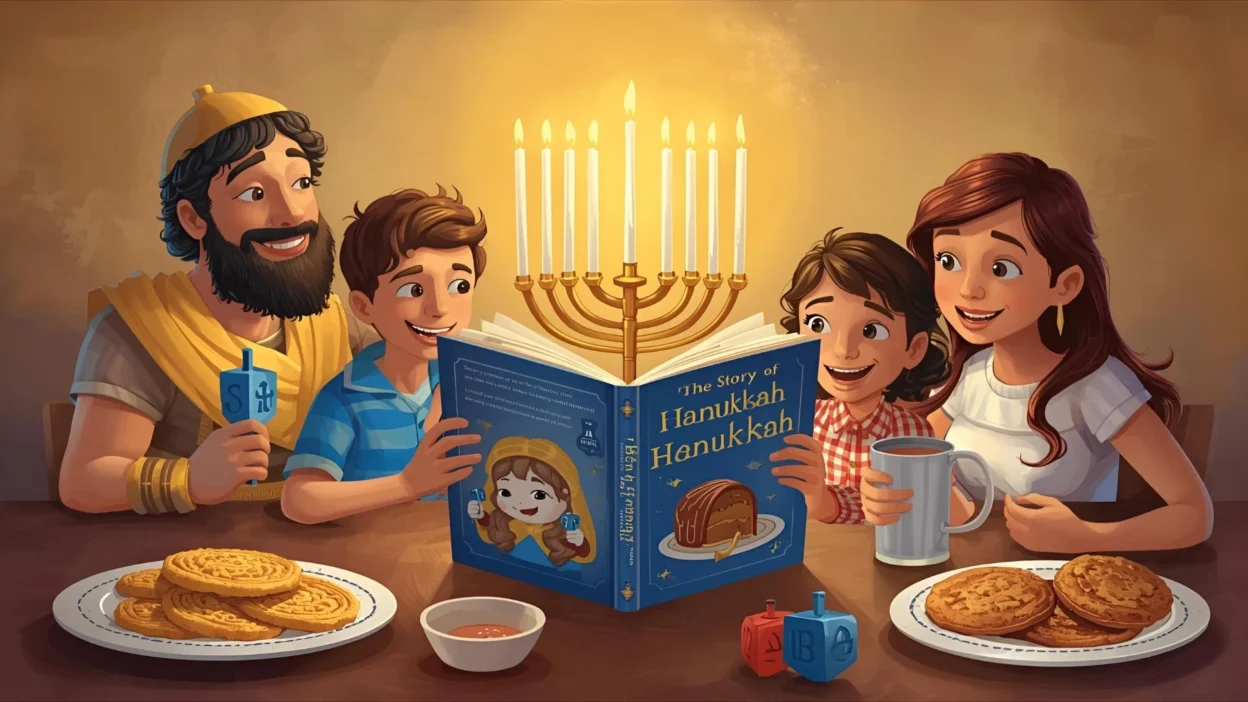
The Story of Hanukkah for Kids tells the exciting and meaningful story behind the Jewish Festival of Lights in a simple and fun way. It explains how a small group called the Maccabees bravely fought for their freedom and how a tiny bit of oil miraculously lasted for eight days. This special story teaches children about courage, faith, and hope. Learning about Hanukkah helps kids understand why families light the menorah, play games, and celebrate together each year.
Hanukkah is one of the most beloved Jewish traditions, and today, it’s more than just candles and gifts; it’s about faith, hope, and miracles. This collection brings you the hot, trending, and best Hanukkah stories of 2025, specially designed for adults who want to explain the story of Hanukkah for kids in a way that is meaningful, simple, and powerful.
If you’re looking for the story of Hanukkah in the Bible, wondering why Hanukkah is celebrated for 8 days, or searching for ways to explain Hanukkah to preschoolers through storytelling, these tales will guide you. We’ll even touch on traditions like Hanukkah food and how these values connect to other traditions like the Passover story. Let’s dive into these inspiring tales!
Story 1: The Little Lamp That Could
Long ago, when the Holy Temple was reclaimed by the Maccabees, the people searched desperately for oil to light the sacred menorah. After days of battle, they found only one small jar—barely enough for one night.
Children watched with wide eyes as their parents carefully poured the oil and whispered prayers of hope. “It won’t last,” one child said sadly. But the priest replied, “Even the smallest light can shine the brightest in the darkest times.”
That night, the menorah glowed warmly, filling the temple with courage. The next night, it still burned. And the next. Eight nights passed, and the flame never faded. The children realized that the miracle was not only in the oil but in the faith of the people who believed in something greater than themselves.
As the years passed, families retold this miracle by lighting candles for eight days. They explained to little ones why Hanukkah is celebrated, reminding them that miracles can come in unexpected ways—sometimes through courage, sometimes through hope.
And so, the tiny jar of oil became more than just fuel for a lamp. It became a symbol that even when the world feels heavy, one small spark of faith can light the way for generations.
Moral: Even the smallest spark of faith can create the biggest miracles.
Story 2: Judah’s Secret Strength
Judah Maccabee was known as the Lion of his people. He wasn’t the tallest, nor the strongest, but his heart burned with courage. When invaders tried to erase Jewish traditions, Judah refused to give up.
He rallied his brothers and friends, whispering, “We fight not for power, but for the right to be who we are.” The battles were fierce, and many nights Judah prayed under the stars, asking for strength. His men looked to him for hope, and Judah never let their spirits fall.
At last, after many struggles, Judah and his people reclaimed the temple. But the real miracle was not just in the oil or the victory—it was in Judah’s faith that never wavered.
Parents today retell this story as a way of explaining Hanukkah to preschoolers and children, showing that bravery isn’t about size but about heart. Just as Judah stood tall against all odds, each child is reminded that they, too, carry strength inside.
Moral: True strength comes from courage and faith, not from size or power.
Story 3: The Feast of Lights
Once the battles ended and the menorah burned for eight nights, the people of Jerusalem rejoiced. They prepared feasts of joy—warm loaves of bread, sweet honey cakes, and the first versions of what we now call Hanukkah food.
Grandmothers told children, “Every bite we share is a reminder of freedom.” Families gathered around, retelling the library Hanukkah story, passing wisdom like treasured recipes. The children laughed, played, and learned that celebration was as holy as prayer.
Over time, Hanukkah became more than remembrance—it became a holiday of togetherness. From potato latkes to sufganiyot, each dish told its own story of resilience and joy.
So today, when families gather to eat and light candles, they are not just celebrating the past. They are adding their own story to the flame, a reminder that traditions live on when shared with love.
Moral: Celebrations keep history alive and connect us through joy and tradition.
Hanukkah is more than a holiday—it’s a treasure chest of wisdom. These top Hanukkah stories for 2026 are written to help adults explain the story of Hanukkah for kids in a simple, engaging way. Whether you’re teaching from the story of Hanukkah in the Bible, answering “why is Hanukkah celebrated for 8 days,” or creating festive moments with candles and Hanukkah food, these tales will light hearts with courage, tradition, and joy.
Story 4: The Eight Bright Nights
A little boy named Eli once asked his father, “Why is Hanukkah celebrated for 8 days?”
His father smiled and sat by the menorah. “When our ancestors reclaimed the temple, they had oil for only one night. But it lasted for eight. Each night represents faith that carried us further than we thought possible.”
Eli’s eyes sparkled as he imagined the flickering flames, one for each night of hope. “So every candle tells a part of the story?” he asked.
“Yes,” his father replied. “Each flame is a promise that miracles are real, even when we cannot see them coming.”
From that night on, Eli lit each candle with pride, whispering his own little prayers of courage. And as he grew, he told the same story to his own children, keeping the miracle alive across generations.
Moral: Every tradition holds the memory of miracles that inspire future generations.
Story 5: Miriam’s Secret Gift
Miriam loved stories more than sweets. Every Hanukkah, she visited the small town library to find the Hanukkah story her grandmother once read to her. But one year, the librarian couldn’t find the book.
Miriam frowned, but then an idea sparked. She sat in a quiet corner, gathered children around, and retold the story from memory—how the Maccabees fought bravely, how the menorah burned bright, how families celebrated freedom with joy.
The children clapped, their eyes glowing. Miriam realized the story was not trapped in books; it lived in her voice, her heart, and their laughter.
From then on, Miriam became the storyteller of the town, passing down Hanukkah tales that no library shelf could ever contain.
Moral: Stories live not in books but in the hearts of those who tell them.
Story 6: The Hidden Candle
Long ago, when celebrating Jewish traditions was forbidden, one family lit a single candle in secret. They whispered prayers in the dark, their hearts trembling but unbroken.
The youngest child asked, “Why risk so much for one candle?”
Her mother bent down and replied softly, “Because even one candle pushes away the darkness. It reminds us who we are.”
That small flame gave them courage through dangerous nights. And when freedom finally returned, that family was the first to light the menorah proudly, no longer hiding their faith.
Today, when parents explain Hanukkah to preschoolers, they retell this story of the hidden candle, reminding children that traditions matter most when they are protected with love.
Moral: Even in secret, faith shines brightly and keeps identity alive.
The miracle of Hanukkah isn’t just about oil and light; it’s about courage, unity, and passing traditions to the next generation. These hot and trending Hanukkah stories of 2026 bring the story of Hanukkah for kids alive for adults who wish to teach meaningfully. From the Passover story connections to the joy of Hanukkah food, each tale helps explain why Hanukkah is celebrated for 8 days, weaving together history, faith, and hope.
Story 7: The Dreidel of Freedom
Long ago, when studying the Torah was forbidden, children played with dreidels to hide their learning. At first glance, it was just a game, but each spin held secret courage.
One day, soldiers approached, and the children quickly spun their dreidels. The soldiers laughed, thinking it was only play, and passed by. But once they were gone, the children unrolled their scrolls and whispered words of faith.
Years later, those same children became parents and told their kids how a small toy protected their tradition. Today, when families play dreidel during Hanukkah, they remember that freedom often begins in quiet, clever acts of courage.
Moral: Even the simplest actions can protect great traditions.
Story 8: The Rabbi’s Feast
In a small village, a rabbi invited everyone for Hanukkah dinner. He had little food, just a pot of potatoes. Yet he welcomed all with joy.
Neighbors arrived carrying bread, honey, apples, and oil. One by one, they added to the meal until the table overflowed with flavors. That night, the village ate together, laughed together, and felt richer than kings.
From that year forward, families brought dishes to share, making Hanukkah a feast of unity. It became the tradition of Hanukkah food, reminding people that blessings multiply when shared.
Moral: Sharing turns little into plenty and strangers into family.
Story 9: The Messenger of Light
A traveler once wandered from village to village, carrying only a small menorah. Wherever he stopped, he lit candles and told the Hanukkah story.
Children gathered eagerly, listening to how the oil lasted eight days, how the Maccabees fought for freedom, and how miracles live in simple flames. Each night, he left behind hope as bright as the candles themselves.
Years later, people remembered the mysterious traveler and said, “He was a messenger of light.” And so, the story spread far and wide, like sparks carried on the wind.
Moral: Sharing light spreads hope farther than we imagine.
Story 10: Hanukkah and Passover’s Promise
One spring, a boy asked his grandfather, “How is the Passover story like Hanukkah?”
His grandfather explained, “Passover celebrates freedom from Egypt, and Hanukkah celebrates freedom from oppression. Both remind us that our faith is stronger than any ruler.”
The boy thought deeply. “So every festival teaches us that freedom is a gift?”
“Yes,” his grandfather smiled. “And each time we celebrate, we promise to honor that gift by living with courage and kindness.”
That year, the boy lit Hanukkah candles with new pride, knowing he was part of a chain that stretched back through history.
Moral: Every festival is a reminder that freedom and faith must be cherished.
FAQs
1. What is Hanukkah?
Hanukkah is a Jewish festival known as the “Festival of Lights.” It celebrates a miracle that happened long ago.
2. Why is Hanukkah celebrated?
It celebrates the victory of the Maccabees and the miracle of oil that lasted eight days in the Temple.
3. Who were the Maccabees?
The Maccabees were a small group of Jewish fighters who stood up for their faith and won their freedom.
4. What is the miracle of Hanukkah?
When the Temple was rededicated, there was only enough oil for one day. Miraculously, it lasted eight days.
5. How many days does Hanukkah last?
Hanukkah lasts for eight days and eight nights.
6. What is a menorah?
A menorah is a special candle holder used during Hanukkah. It holds nine candles—eight for each night and one helper candle called the shamash.
7. What foods are eaten on Hanukkah?
People eat foods cooked in oil, like latkes (potato pancakes) and sufganiyot (jelly-filled donuts).
8. What is a dreidel?
A dreidel is a spinning top with Hebrew letters. Children play a fun game with it during Hanukkah.
9. Do people give gifts on Hanukkah?
Yes, many families exchange small gifts or give chocolate coins called “gelt.”
10. What does Hanukkah teach kids?
Hanukkah teaches bravery, hope, faith, and standing up for what is right.
Conclusion:
The story of Hanukkah reminds kids that even a small light can shine brightly in the darkness. It teaches courage, faith, and the power of believing in miracles. Celebrated with candles, games, and delicious food, Hanukkah brings families together in joy and gratitude for eight special nights.