The 🤡 clown emoji can be funny, sarcastic, embarrassing, or even creepy depending on how it is used.
If you are wondering, “What is the meaning of 🤡?”, it usually depends on the conversation.
The emoji can represent a real clown, but in texting and social media, people often use it to joke about foolish behavior, a bad decision, embarrassment, or something ridiculous.
It can also be used to make fun of yourself without taking the situation too seriously. Context, tone, and the relationship between people can all change how it feels.
Sometimes, 🤡 says “I messed up” without using any words.
What Does the Clown Emoji Mean?
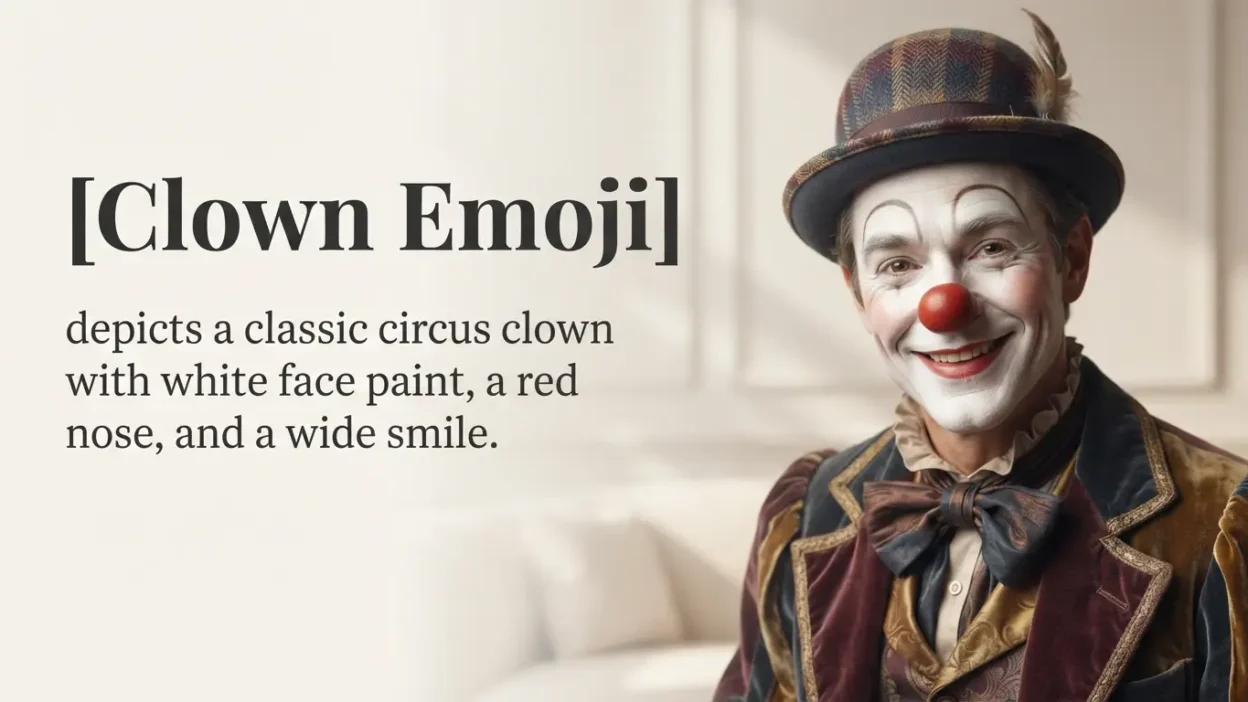
So, what is the 🤡? It is the Clown Face emoji, showing a clown with colorful hair, makeup, and a large smile. Its literal meaning is connected to clowns, circuses, parties, costumes, and entertainment.
Online, however, 🤡 often has a figurative meaning. Someone may use it when they think a person is acting foolish or when they want to laugh at their own mistake.
Common meanings include:
- Foolish or silly behavior
- A bad decision
- Embarrassment
- Self-mockery
- Sarcasm
- Ridiculous behavior
- A strange or uncomfortable situation
- A literal clown
For example:
“I said I wouldn’t text him again, then texted him five minutes later 🤡”
Here, the person is laughing at their own behavior.
Another example:
“He really thought that was going to work 🤡”
In this case, the emoji can sound like playful criticism or sarcasm.
Is 🤡 an insult?
It can be, but it is not always insulting.
A friend might send 🤡 after you make a silly mistake as a joke. However, sending only 🤡 to someone during an argument may sound like calling them foolish or ridiculous.
That is why the surrounding message matters. The same emoji can feel funny between close friends but rude in a serious conversation.
Clown Emoji Meaning in Texting
In everyday texting, 🤡 is commonly used as a reaction to something silly, embarrassing, or unbelievable.
For example:
“I forgot my wallet at home again 🤡”
This shows that the sender is making fun of their own mistake.
It can also be used when teasing a friend:
“You said you were going to sleep early, and now it’s 2 a.m. 🤡”
The tone is usually playful rather than serious.
Another common use is reacting to a ridiculous situation:
“They changed the deadline after we finished the project 🤡”
Here, the emoji adds sarcasm and frustration.
How to Use It on Social Media
The symbol works well in short social-media posts because it can communicate a strong reaction without many words.
TikTok, it may appear in comments or captions about embarrassing choices, strange behavior, or online drama. On Instagram, people may use it in comments, Stories, captions, or memes when something feels ridiculous.
On WhatsApp, it is often more personal. Friends may use it while teasing one another or sharing stories about embarrassing moments.
For example:
“Me checking their profile again after saying I was over it 🤡”
The words explain the situation, while the emoji adds a self-mocking tone.
Do and Don’t
Do:
- Match the emoji to the tone of the conversation.
- Use it when joking about your own mistakes.
- Consider your relationship with the other person.
- Add words if the meaning could be unclear.
Don’t:
- Assume everyone will interpret it the same way.
- Use it to insult someone during a serious discussion.
- Use it simply because it is popular.
- Ignore the context of the conversation.
🤡 Emoji Examples
Here are some natural ways people might use it:
“I bought another pair of shoes even though I promised to save money 🤡”
“Me thinking I could finish everything in one hour 🤡”
“You forgot your own birthday plans? 🤡”
“I studied the wrong chapter for the test 🤡”
“That was definitely not my best decision 🤡”
In most of these examples, the emoji is not talking about a literal clown. It adds humor, embarrassment, or sarcasm to the message.
Clown Emoji Combinations — Copy and Paste
You can combine 🤡 with a few other emojis to create different tones.
🤡😂 — Laughing at a silly or embarrassing situation.
🤡😭 — Something is both funny and painful.
🤡💀 — A ridiculous situation that is extremely funny.
🤡🙃 — Sarcastic frustration.
🤡😩 — Regretting a silly decision.
🤡🎈 — A playful or literal clown reference.
🤡🎂 — A birthday or party clown.
🤡🎪 — A circus or clown-related situation.
🤡😱 — A creepy or scary clown situation.
🤡😂😭 — Something is hilariously embarrassing.
These combinations work best when they match the message. You do not need a long string of emojis to make the meaning clear.
Why Does the Clown Emoji Look Different on iPhone and Android?
You may notice that 🤡 does not look exactly the same on every device.
Apple, Google, Samsung, Microsoft, and other platforms create their own artwork for emojis. The underlying Unicode character is the same, but details such as colors, hair, eyes, and facial features can vary.
These design differences usually do not change the basic meaning. However, one version may look slightly funnier, stranger, or creepier than another.
Is the Clown Emoji Creepy?
It can be.
Although 🤡 is often humorous, it can also be used when talking about creepy or frightening clowns. This is especially common in conversations about horror movies, Halloween, scary costumes, or unsettling situations.
For example:
“Why is there a clown outside at midnight? 🤡”
Here, the emoji feels much more unsettling than funny.
If you are wondering about other scary-looking emojis, “What does the 👺 emoji mean?” is a different question. 👺 is commonly associated with a Japanese tengu or goblin-like figure and can suggest anger, mischief, or something intimidating. It should not be treated as another version of 🤡.
🤡 vs. 💀: What Is the Difference?
People sometimes use 🤡 and 💀 together, but they communicate different ideas.
The clown face often points to foolishness, ridiculous behavior, embarrassment, or sarcasm.
The skull emoji, 💀, is frequently used online to express that something is extremely funny, shocking, embarrassing, or overwhelming. It can suggest “I’m dead” in a figurative way.
So, if you ask “What does the 💀 emoji mean?”, its meaning is usually very different from 🤡 even though both can appear in funny reactions.
For example:
“I actually sent that message to the wrong person 🤡💀”
Here, 🤡 highlights the embarrassing mistake, while 💀 shows how funny or painful the situation feels.
When Should You Avoid Using 🤡?
Because it can sound insulting, be careful when using it with people you do not know well.
For example, replying to someone’s serious personal story with 🤡 could seem disrespectful. In a friendly conversation, however, the same emoji may simply be playful.
If you are unsure, add a few words to make your intention clear:
“I’m laughing at myself 🤡”
This makes the playful meaning easier to understand.
Frequently Asked Questions
What is the meaning of 🤡?
The 🤡 emoji can represent a real clown, but in texting it often suggests foolishness, embarrassment, sarcasm, or ridiculous behavior. People also use it to joke about their own mistakes.
What is the 🤡?
The 🤡 is called the Clown Face emoji. It can be used literally for clowns and circus-related topics or figuratively when someone is acting silly or making fun of themselves.
Does 🤡 mean someone is reckless?
Sometimes it can suggest that someone is acting foolish or ridiculous, but it does not always mean the person is reckless. Friends may use it playfully, especially when teasing each other.
Does 🤡 have a romantic meaning?
Not usually. It is more commonly associated with humor, sarcasm, embarrassment, or foolish behavior. Its meaning can change depending on the conversation.
What does 💀 mean compared with 🤡?
💀 is often used online to show that something is extremely funny, shocking, or embarrassing. 🤡 more often focuses on foolishness, ridiculous behavior, or making fun of a bad decision.
What does 👺 mean compared with 🤡?
👺 usually represents a Japanese tengu-like figure and can suggest anger, mischief, or an intimidating feeling. 🤡 is more closely connected with clowns, foolishness, humor, and embarrassment.
Conclusion
The clown emoji 🤡 can mean much more than an actual clown.
In texting and social media, it often shows foolish behavior, embarrassment, sarcasm, or a ridiculous situation.
It can also be used for self-mockery when you want to laugh at your own mistake.
Since the tone can change from funny to insulting or creepy, always consider the words, situation, and relationship behind the message.