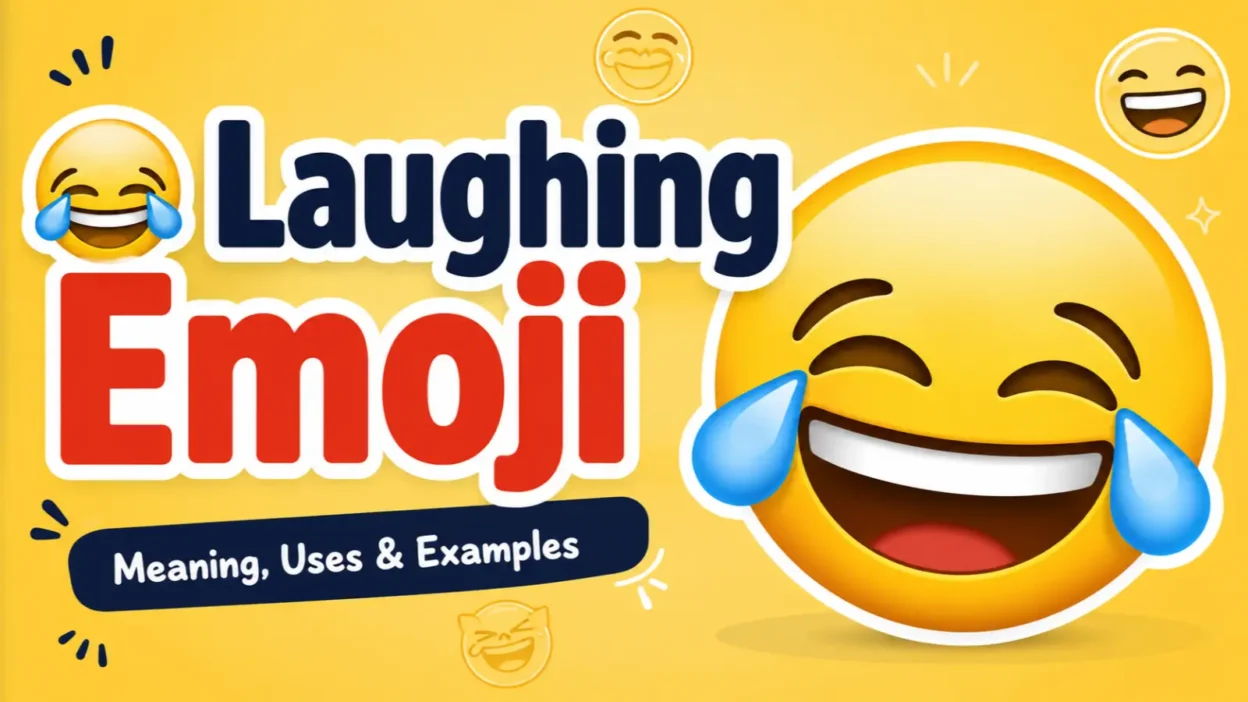
A laughing emoji can turn a simple message into a clear reaction. But with several laughing faces available, it is easy to wonder which one fits your message best.
The laughing emoji usually shows that something is funny, amusing, silly, or entertaining. Popular choices include 😂, 🤣, 😆, 😄, 😅, and 😁.
Although they all relate to laughter or happiness, each can create a slightly different tone.
The meaning can also change depending on the conversation, your relationship with the other person, and the words around the emoji.
The right laughing emoji can make a simple reaction feel much more expressive.
What Does the Laughing Emoji Mean?
The laughing emoji usually means “That is funny,” “I’m laughing,” or “You made me laugh.” It is commonly used in texting, WhatsApp chats, Instagram comments, TikTok replies, and other social-media conversations.
😂 is one of the most common choices for showing strong amusement. 🤣 can make the reaction feel even more exaggerated. 😆 often gives a playful, energetic feeling, while 😄 is more generally cheerful. 😅 can suggest that you are laughing about something awkward, embarrassing, or stressful.
For example:
- “That video was hilarious 😂” — strong amusement.
- “I forgot my own password again 😅” — laughing at an awkward mistake.
- “You really said that? 🤣” — exaggerated laughter or disbelief.
- “Good morning 😄” — cheerful and friendly rather than a direct reaction to a joke.
Unicode officially identifies 😂 as Face with Tears of Joy, 🤣 as Rolling on the Floor Laughing, 😆 as Grinning Squinting Face, 😄 as Grinning Face with Smiling Eyes, 😅 as Grinning Face with Sweat, and 😁 as Beaming Face with Smiling Eyes. Unicode Emoji Charts
| Emoji | Common meaning | Possible interpretation | Best used when |
|---|---|---|---|
| 😂 | Strong laughter | Something is very funny | Jokes, funny stories, memes, and videos |
| 🤣 | Very strong laughter | “I’m laughing so hard” | Extremely funny moments |
| 😆 | Energetic laughter | Playful amusement or excitement | Casual conversations |
| 😄 | Cheerful smile | Happiness or light amusement | Friendly messages |
| 😅 | Nervous or relieved laugh | Awkwardness, embarrassment, or relief | Small mistakes or uncomfortable moments |
| 😁 | Big happy grin | Excitement or playful happiness | Celebrations and positive news |
Laughing Emoji Examples
😂 Face with Tears of Joy
Meaning: Strong amusement when something is very funny.
Example 1: That joke got me 😂
Example 2: I can’t stop laughing at this video 😂
🤣 Rolling on the Floor Laughing
Meaning: Very strong or exaggerated laughter.
Example 1: You really posted that? 🤣
Example 2: That was the funniest thing I’ve seen all week 🤣
😆 Grinning Squinting Face
Meaning: A big, energetic laugh or playful reaction.
Example 1: You actually did it 😆
Example 2: Okay, that was hilarious 😆
😄 Grinning Face with Smiling Eyes
Meaning: Cheerful happiness, friendliness, or light amusement.
Example 1: That made my morning 😄
Example 2: Glad you liked it 😄
😅 Grinning Face with Sweat
Meaning: A nervous, embarrassed, or relieved laugh.
Example 1: I almost sent that message to the wrong person 😅
Example 2: I totally forgot about the meeting 😅
😁 Beaming Face with Smiling Eyes
Meaning: A wide, happy grin that can show excitement or playful joy.
Example 1: I finally finished it 😁
Example 2: Guess who got tickets? 😁
How to Use the Laughing Emoji in Texts and Social Media
A laughing emoji works best when it matches the tone of your message. In laughing emoji text, a single 😂 can quickly show that you genuinely found something funny. Several laughing emojis can make the reaction feel more dramatic or playful.
For example:
“You really thought that was going to work? 😂”
“I just watched that video three times 🤣”
“I almost walked into the wrong classroom 😅”
A funny laughing emoji can also make teasing feel lighter, especially when you already have a friendly relationship with the other person. However, context still matters. A laughing emoji may feel rude if someone is talking about a serious problem.
On WhatsApp, laughing emojis are common in private conversations and group chats. You can use them after a joke, funny photo, embarrassing story, or playful comment.
Example:
“Did you really wear two different shoes today? 😂”
You can also use a laughing emoji GIF when a normal emoji does not feel expressive enough. GIFs can show a bigger or more dramatic reaction, especially in group chats and casual conversations.
On Instagram, laughing emojis are often used in comments, captions, replies, and reactions to funny posts. 😂 and 🤣 can work well with memes, Reels, funny photos, and humorous comments.
A laughing emoji meme can also be used to show an exaggerated reaction to something relatable or ridiculous.
TikTok
TikTok comments often use laughing emojis as quick reactions to funny videos, unexpected moments, jokes, and relatable situations. The exact style can vary with online trends, but the basic idea is usually easy to understand.
Do:
- Match the emoji to the tone.
- Consider your relationship with the person.
- Use words when the meaning could be unclear.
- Use 😂 or 🤣 when you genuinely want to show strong amusement.
Don’t:
- Assume every laughing emoji means exactly the same thing.
- Use laughter when someone is sharing something serious.
- Overuse emojis in professional or sensitive conversations.
- Assume an emoji-only response will always be understood correctly.
Laughing Emoji Images, PNGs, Drawings, and Downloads
Laughing emojis are also popular outside of texting. People use them in social-media graphics, blog posts, presentations, memes, videos, and digital designs.
A laughing emoji PNG can be useful when you need a transparent emoji image for a graphic or social-media design. A laughing emoji drawing can work well for worksheets, illustrations, creative projects, or custom artwork.
If you are searching for a laughing emoji download, check the source and usage rights before using an image commercially. An emoji character and a particular company’s artwork are not necessarily the same thing.
You may also see laughing emoji stickers, GIFs, memes, and custom illustrations online. These can communicate the same general feeling while giving the reaction a different visual style.
Best Laughing Emoji Combos — Copy & Paste
Funny Reactions
😂😂 — A stronger reaction to something genuinely funny.
🤣😂 — Big laughter after an especially funny moment.
😆😂 — Playful laughter with extra energy.
Cute and Playful
😄😂 — A cheerful reaction to a funny comment.
😁😆 — Happy and playful excitement.
😅😂 — Laughing about an awkward moment.
Social Media Reactions
😂🤣 — A quick reaction to a hilarious post or video.
😆😂🤣 — An exaggerated reaction to something extremely funny.
😄😂 — Friendly laughter with a lighter tone.
Everyday Texting
😂❤️ — Laughing while showing warmth or affection.
🤣😭 — An exaggerated online reaction to something extremely funny.
😅😂 — “That was awkward, but I can laugh about it.”
Why Does the Laughing Emoji Look Different on iPhone and Android?
The laughing emoji on iPhone may look slightly different from the same emoji on Android, Samsung, Windows, or another device.
Different technology companies create their own artwork for Unicode emoji characters. As a result, facial expressions, shapes, colors, and small details can vary between platforms.
The underlying Unicode emoji can still be the same even when the artwork looks different. These visual differences may slightly affect the feeling of an emoji, but they do not automatically give it a completely different meaning.
Laughing Emojis in 2026
Laughing emojis remain a familiar part of online communication. 😂, 🤣, 😆, and 😅 continue to appear in casual texts, social-media comments, memes, and reaction-based conversations.
| Emoji | Current usage | Common context | Where you may see it |
|---|---|---|---|
| 😂 | Everyday strong laughter | Jokes, memes, videos | WhatsApp, Instagram, TikTok |
| 🤣 | Exaggerated laughter | Very funny moments | Chats and social media |
| 😆 | Playful amusement | Casual reactions | Texting and comments |
| 😅 | Awkward or relieved laughter | Mistakes and uncomfortable moments | Chats and group conversations |
The main idea is simple: online laughter changes with internet culture, but familiar laughing emojis remain useful because their basic reactions are easy to recognize.
Does Context Change the Meaning of a Laughing Emoji?
Yes. A laughing emoji can feel friendly, sarcastic, awkward, or even dismissive depending on the message around it.
For example, “That was so funny 😂” clearly shows amusement. But replying only with “😂” to someone’s serious problem could make the response seem insensitive.
Your relationship with the person also matters. A close friend may understand a playful reaction immediately, while someone you do not know well may interpret the same emoji differently.
Culture, age, online communities, and personal texting habits can also influence emoji interpretation. It is better to consider the whole conversation rather than judging an emoji by itself.
Frequently Asked Questions
How do you use 😂?
😂 is commonly used to show that something is very funny. You can use it in texts, WhatsApp chats, Instagram comments, TikTok replies, memes, and social-media posts when you want to show strong amusement.
Is 😆 a laughing emoji?
Yes. 😆 is a laughing-related emoji officially known as Grinning Squinting Face. It can express strong amusement, playful laughter, excitement, or a cheerful reaction.
What’s the difference between 😂 and 🤣?
Both usually express strong laughter, but 🤣 often feels more exaggerated. 😂 is commonly used as an everyday reaction to something funny, while 🤣 can suggest that something is so funny you are laughing extremely hard.
What is 😂?
😂 is officially called Face with Tears of Joy. It commonly means that something is very funny or that you are laughing hard. It can appear in texts, comments, captions, memes, and other casual online conversations.
Can 😂 be sarcastic?
Yes. 😂 can sometimes be used sarcastically or ironically, depending on the words and situation. The surrounding conversation is important for understanding whether the laughter is genuine or playful.
Why does 😂 look different on iPhone and Android?
Different platforms use their own artwork for Unicode emoji, so 😂 can have small visual differences on iPhone, Android, Samsung, Windows, and other devices. The underlying emoji character can still be the same.
Conclusion
The laughing emoji is a simple way to show amusement, happiness, awkwardness, or playful humor in digital conversations.
😂, 🤣, 😆, 😄, 😅, and 😁 can all communicate laughter, but they can create different tones.
The best choice depends on the situation, your relationship with the other person, and the words around the emoji.
When the context is clear, a well-chosen laughing emoji can make your message feel warmer, funnier, and more expressive.

I am Nico Sprout, a passionate content creator and the voice behind smallzstory.com, sharing engaging stories, captions, memes, and helpful content for readers worldwide.