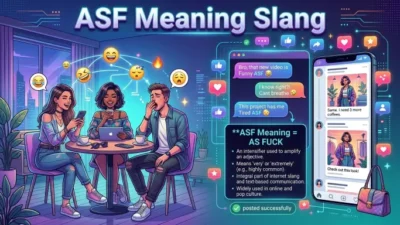
The meaning of ASF in online conversations is most commonly “As F*.”** It is an internet slang abbreviation used to add strong emphasis to an adjective or feeling. Instead of writing the full phrase, people shorten it to ASF because it is quicker to type and widely understood on social media and messaging apps. For example, if someone says, “I’m tired ASF,” they mean they are extremely tired. Likewise, “This movie is funny ASF” means the movie is very funny.
ASF is especially popular among younger internet users because it helps express emotions in a casual and dramatic way. You’ll often see it in text messages, TikTok captions, Instagram comments, Snapchat chats, gaming communities, and meme posts. It has become part of everyday digital communication, making conversations feel more expressive without requiring long explanations.
Although the primary meaning of ASF is “As F***,” it should be used carefully because it originates from a profanity. While the abbreviation itself is less explicit than the full phrase, many people still recognize what it stands for. For that reason, ASF is best suited for informal conversations with friends rather than professional emails, school assignments, or business communication.
It’s also important to remember that context matters. In some industries, news articles, or technical discussions, ASF may represent completely different phrases, such as an organization, a medical term, or a disease. Before assuming its meaning, consider where you saw the abbreviation and what the conversation is about. In most everyday texting and social media interactions, however, ASF almost always means “As F*”** and is simply used to emphasize a statement.
What Does ASF Stand For?
If you’re searching for the meaning of ASF, the first question you’ll likely ask is, “What does ASF stand for?” In modern internet slang, ASF stands for “As F*.”** It is an abbreviation that replaces the fully written phrase while keeping the same meaning and emphasis. Instead of typing the complete expression, people simply use ASF to save time and make their messages shorter.
The abbreviation is typically placed after an adjective to show that something is at an extreme level. For instance, if someone writes, “It’s cold ASF,” they mean it is extremely cold. Similarly, “She’s happy ASF” means she is very happy, while “That game was hard ASF” means the game was extremely difficult. In each example, ASF functions as an intensifier rather than changing the overall meaning of the sentence.
The popularity of ASF has grown alongside social media platforms and instant messaging apps. Since people often prefer quick, informal communication online, abbreviations like ASF have become common in conversations on TikTok, Snapchat, Instagram, WhatsApp, Discord, and X. Many users choose ASF instead of writing the full phrase because it is shorter and slightly less explicit while still conveying the intended emotion.
Even though ASF is widely recognized in casual conversations, it is not considered appropriate for formal communication. Because it is derived from a profanity, you should avoid using it in business emails, professional documents, academic assignments, or official presentations. Understanding what ASF stands for and the context in which it is used will help you interpret online conversations accurately and decide when it is suitable to use the abbreviation yourself.
Meaning of ASF in Texting
The meaning of ASF in texting is almost always “As F*,”** a slang abbreviation used to emphasize an emotion, opinion, or description. People add ASF after an adjective to show that something is at a very high or intense level. It makes a message sound more expressive without adding extra words. Because texting is designed for quick communication, abbreviations like ASF have become a natural part of everyday conversations.
For example, if a friend texts, “I’m hungry ASF,” they mean they are extremely hungry. A message saying, “That test was hard ASF,” means the test was very difficult. Likewise, “This song is good ASF” tells the reader that the person really enjoys the song. In each case, ASF strengthens the meaning of the adjective before it.
You’ll most often encounter ASF in casual text messages between friends, classmates, family members, or gaming communities. It is commonly used in one-on-one chats, group conversations, and direct messages where the tone is relaxed and informal. Since most people understand the abbreviation, it helps keep messages short while still expressing strong feelings.
However, the meaning of ASF should always be interpreted based on context. Because it comes from a profane expression, it may not be suitable for every audience. Avoid using ASF when texting teachers, employers, clients, or anyone in a professional setting. Instead, choose alternatives such as very, extremely, or really. Knowing when to use ASFand when to avoid ithelps you communicate clearly while matching the tone of the conversation.
Meaning of ASF on Social Media
The meaning of ASF on social media is the same as it is in textingit usually stands for “As F*”** and is used to add strong emphasis to a statement. Whether you’re scrolling through TikTok videos, reading Instagram comments, checking Snapchat stories, or browsing posts on X, you’ll often see ASF used to express excitement, humor, frustration, or surprise. Because social media encourages short, engaging content, abbreviations like ASF have become part of everyday online language.
On TikTok, creators frequently use ASF in captions to make their content more relatable or entertaining. A caption like “This trend is funny ASF” tells viewers that the creator finds the trend extremely funny. On Instagram, ASF often appears in comments and memes where users react to photos, reels, or viral posts. For example, someone might comment, “That outfit is cute ASF,” to show strong approval.
On Snapchat, ASF is commonly used in private chats between friends. Since conversations on Snapchat are usually casual, abbreviations help people type quickly while keeping the tone natural. On X (formerly Twitter), users include ASF in short posts to emphasize opinions or reactions, while gamers and online communities also use it in chats and forums.
Although the meaning of ASF remains consistent across most platforms, it’s important to remember your audience. Social media is generally informal, making ASF acceptable in many situations. However, if you’re posting on a professional account or communicating with colleagues, teachers, or business contacts, it’s better to avoid slang and use more formal language. Context always determines whether ASF is appropriate.
How to Use ASF Correctly
Understanding the meaning of ASF is only the first step. Knowing how to use it correctly will help you sound natural in online conversations while avoiding awkward situations. ASF is an intensifier, meaning it is added after an adjective to emphasize a feeling, opinion, or description. It is not a standalone word and should not replace the adjective it is describing.
The most common sentence structure is simple: adjective + ASF. For example, “I’m tired ASF,” “That movie was scary ASF,” or “The food is good ASF.” In each sentence, ASF strengthens the adjective and tells the reader that the feeling or quality is at a very high level. This usage is common in text messages, social media captions, gaming chats, and conversations between friends.
When using ASF, make sure the tone matches the situation. It works best in informal settings where internet slang is widely accepted. Friends, classmates, and online communities will usually understand the abbreviation without any confusion. However, avoid using ASF in professional emails, job applications, school assignments, business presentations, or conversations with people who may not be familiar with internet slang.
Another important tip is to avoid overusing ASF. Repeating it in every message can make your writing sound exaggerated or repetitive. Instead, use it only when you genuinely want to emphasize a point. If you’re communicating in a formal environment, replace ASF with words like very, extremely, highly, or really. By understanding both the meaning of ASF and its proper usage, you can communicate more effectively while choosing the right language for every audience.
Examples of ASF in Everyday Conversations
Once you understand the meaning of ASF, it becomes much easier to recognize and use the abbreviation in real conversations. ASF is commonly added after an adjective to emphasize a feeling, opinion, or situation. Because it is informal internet slang, you’ll mostly see it in text messages, social media posts, gaming chats, and conversations between friends. Here are some common examples that show how ASF is used naturally.
Friends
- I’m bored ASF today.
- That concert was loud ASF.
- Your new haircut looks good ASF.
School
- This homework is hard ASF.
- I’m nervous about tomorrow’s exam.
- That class was boring ASF.
Gaming
- This level is difficult ASF.
- Our team is lucky ASF today.
- That boss fight was intense ASF.
Family
- I’m tired after the trip.
- Dinner smells good ASF.
- The house is quiet ASF tonight.
Social Media
- This meme is funny ASF.
- That sunset looks beautiful ASF.
- The comments are wild ASF.
These examples demonstrate that ASF is used to strengthen the adjective that comes before it. It helps the writer express stronger emotions without writing a long explanation. However, remember that the meaning of ASF comes from a profane phrase, so it is best reserved for casual conversations. If you’re writing a professional email, speaking with a teacher, or communicating in a formal setting, replace ASF with words like very, extremely, or really. Choosing the right expression for the situation helps you communicate clearly while maintaining the appropriate tone for your audience.
Positive and Negative Examples of ASF
Understanding the meaning of ASF is easier when you see how it is used in different situations. Since ASF is an intensifier, it can describe positive, negative, or neutral experiences. The abbreviation itself does not change the meaning of a sentenceit simply makes the adjective stronger. Whether the message sounds happy, frustrated, excited, or surprised depends on the words surrounding ASF.
Positive Examples
Positive uses of ASF express excitement, happiness, admiration, or satisfaction. For example:
- That pizza is good ASF.
- Your new car looks clean ASF.
- I’m excited for the ASF vacation.
- This song is catchy ASF.
- The weather is beautiful today.
Negative Examples
Negative uses highlight frustration, disappointment, or discomfort. Some common examples include:
- I’m tired after work.
- This traffic is slow ASF.
- That movie was boring ASF.
- The exam was difficult ASF.
- It’s hot outside.
Neutral Examples
ASF can also emphasize observations that are neither clearly positive nor negative. For instance:
- The building is tall ASF.
- The line is long ASF.
- The room is quiet ASF.
- The road is wide ASF.
- That backpack is heavy ASF.
No matter the situation, the meaning of ASF remains the sameit adds extra emphasis to the adjective before it. Because it originates from a profane expression, ASF should only be used in casual conversations where informal slang is acceptable. In professional emails, academic writing, or business communication, choose alternatives such as very, extremely, or really to express emphasis in a more appropriate and respectful way.
Different Meanings of ASF Besides “As F***”
Although the meaning of ASF in texting and social media is usually “As F*,”** the abbreviation can have several other meanings depending on the context. This is why it’s important not to assume that ASF always refers to internet slang. The topic being discussed often provides the clues needed to interpret the abbreviation correctly.
One of the most widely recognized alternative meanings is African Swine Fever, a highly contagious viral disease that affects pigs. In agriculture, veterinary medicine, and news reports, ASF almost always refers to this animal disease rather than slang. Another common meaning is Air Safety Foundation, which has been used by aviation organizations focused on improving flight safety through education and research.
In technology, education, business, and government documents, ASF may also represent the names of companies, organizations, software formats, or internal programs. For example, some technical discussions use ASF as an abbreviation for Advanced Systems Format, a digital media file format developed by Microsoft. Because these meanings are specific to particular industries, readers rely on context to determine the correct interpretation.
If you see ASF in a casual text message, meme, or social media caption, it almost always means “As F*.”** However, if it appears in a scientific article, news report, technical guide, or official document, it is much more likely to refer to one of its professional or industry-specific definitions.
Understanding the different uses of ASF helps prevent misunderstandings and ensures you interpret the abbreviation accurately. While the slang version is the most common in everyday online conversations, recognizing its alternative meanings will make it easier to understand discussions across different fields and contexts.
Is ASF a Bad Word?
A common question people ask after learning the meaning of ASF is whether it is considered a bad word. The short answer is it depends on the audience and the context. ASF itself is an abbreviation, not an explicit swear word. However, it stands for “As F*,”** which contains profanity. Because of this connection, many people still view ASF as informal or mildly offensive, even though the full word is not written.
In casual conversations with friends, classmates, or online gaming communities, ASF is widely accepted and often used without causing offense. People use it to emphasize emotions or opinions, such as saying, “I’m excited ASF” or “That movie was funny ASF.” On social media platforms like TikTok, Instagram, Snapchat, and X, you’ll frequently see the abbreviation in captions, comments, and memes.
Despite its popularity, ASF is not suitable for every situation. It is generally inappropriate in professional emails, workplace communication, academic assignments, business presentations, or formal conversations. Some people may find the abbreviation disrespectful because they know what it represents, while others may simply consider it unprofessional.
If you’re unsure whether ASF is appropriate, it’s safer to choose alternatives like very, extremely, really, or incredibly. These words express the same idea without including slang or implied profanity.
Ultimately, the meaning of ASF remains the same regardless of where you see it, but your choice to use it should depend on your audience. Understanding the setting and the people you’re communicating with will help you decide whether ASF is acceptable or if a more formal expression is the better option.
Should You Use ASF at Work or School?
Knowing the meaning of ASF is important, but understanding when to use it is just as essential. Although ASF is a common internet slang abbreviation, it is best reserved for informal conversations. Because it stands for “As F*,”** Many people consider it inappropriate in professional or academic settings. Even though the abbreviation hides the full profanity, most readers still recognize what it means.
In the workplace, avoid using ASF in emails, reports, presentations, meeting notes, or messages to managers, clients, or coworkers. Professional communication should be clear, respectful, and free from slang that could be misunderstood or appear unprofessional. Instead of writing, “The project is difficult ASF,” choose a more appropriate phrase such as “The project is extremely challenging” or “The project is very complex.”
The same rule applies in schools and colleges. Students should avoid using ASF in essays, research papers, assignments, or emails to teachers and professors. Academic writing values formal language, and internet slang can reduce the credibility of your work. While classmates may understand the abbreviation in private messages or group chats, it should not appear in official school communication.
There are many professional alternatives that express emphasis without using slang. Words like very, extremely, highly, really, and especially can communicate the same idea in a respectful and polished way.
The meaning of ASF makes it a useful expression for casual texting and social media, but it is not appropriate for every audience. Before using it, consider who will read your message and whether the setting calls for informal language. Choosing the right words for the situation helps you communicate effectively while maintaining a professional and respectful tone.
Slang Words Similar to ASF
If you understand the meaning of ASF, you may also come across other internet slang terms that serve a similar purpose in online conversations. These abbreviations are widely used in texting, social media, gaming, and messaging apps to make communication faster and more expressive. While each has a slightly different meaning, they all help people share emotions, opinions, or reactions in a casual way.
One of the closest alternatives is AF, which also stands for “As F*.”** Many people use AF and ASF interchangeably, although ASF has become increasingly popular on platforms like TikTok and Snapchat. Another common abbreviation is FR, meaning “For Real.” It is used to show agreement or emphasize that something is true. For example, “That movie was amazing FR.”
You may also see NGL, which stands for “Not Gonna Lie.” People use it when sharing an honest opinion, such as “NGL, that game was harder than I expected.” TBH, meaning “To Be Honest,” has a similar purpose and often introduces a personal thought or truthful statement.
Other popular slang terms include IMO (“In My Opinion”), Lowkey, and Highkey. Lowkey describes something done quietly or with little attention, while Highkey expresses strong or obvious feelings. These expressions often appear alongside internet slang like ASF in casual conversations.
Although these abbreviations are common online, they should be used thoughtfully. Like the meaning of ASF, most slang terms are best suited for informal settings rather than professional or academic communication. Understanding these related expressions will help you read online conversations more confidently and communicate naturally across different social media platforms.
ASF vs AF: What’s the Difference?
Many people who search for the meaning of ASF also wonder how it compares to AF. The truth is that both abbreviations are very similar and are often used interchangeably in online conversations. In most cases, AF and ASF both stand for “As F*”** and are used to add strong emphasis to an adjective or feeling. The difference is not in the meaning but in how people choose to write the abbreviation.
For example, someone might text, “I’m tired AF,” while another person writes, “I’m tired ASF.” Both sentences mean the same thing: the person is extremely tired. Likewise, “This game is hard AF” and “This game is hard ASF” express the same level of difficulty. The choice between AF and ASF often comes down to personal preference or the slang commonly used within a particular online community.
In recent years, ASF has become especially popular on platforms like TikTok, Snapchat, Instagram, and Discord. Some users feel that ASF looks less explicit than AF, even though both abbreviations refer to the same phrase. Others simply use whichever version they have seen most often in their social circles.
Neither AF nor ASF is appropriate for formal communication. Since both originate from a profane expression, they should be avoided in professional emails, academic writing, business presentations, or official documents. Instead, use words like very, extremely, or highly to express emphasis.
When comparing the two, there is no significant difference in meaning. Understanding the meaning of ASF and how it relates to AF allows you to recognize both abbreviations in text messages, social media posts, and online chats without confusion.
Common Mistakes People Make with ASF
Even after learning the meaning of ASF, many people still misunderstand how and when to use it. Because ASF is a popular internet slang abbreviation, it is easy to assume that it fits every conversation. However, using it incorrectly can confuse readers or create an unprofessional impression. Understanding the most common mistakes will help you communicate more effectively in both casual and formal situations.
One frequent mistake is assuming that ASF always means “As F*.”** While this is the most common definition in texting and social media, ASF can also stand for other terms in fields such as medicine, agriculture, aviation, and technology. If you see ASF in a news article, scientific paper, or technical document, always consider the context before deciding what it means.
Another common error is using ASF in professional or academic communication. Since the abbreviation comes from a profane expression, it is not appropriate for business emails, school assignments, reports, or official presentations. Even though the full word is abbreviated, many readers still recognize its meaning and may find it unsuitable.
Some people also use ASF in the wrong sentence structure. The abbreviation works best after an adjective, such as “happy ASF” or “cold ASF.” Placing it randomly within a sentence can make the message sound unnatural or confusing.
Finally, avoid overusing ASF. Adding it to every sentence can make your writing seem repetitive and reduce its impact. Use it only when you genuinely want to emphasize a feeling or opinion.
By understanding the meaning of ASF, paying attention to context, and avoiding these common mistakes, you can use the abbreviation naturally while knowing when a more formal alternative is the better choice.
FAQs:
What does ASF mean in texting?
The meaning of ASF in texting is usually “As F*.”** It is an internet slang abbreviation used to emphasize an adjective or feeling. For example, “I’m hungry ASF” means the person is extremely hungry. It is commonly used in casual text messages between friends and in online chats.
What does ASF mean on TikTok?
On TikTok, ASF has the same meaning as it does in texting. Creators use it in captions, comments, and videos to express strong emotions or reactions. A caption like “This trend is funny ASF” means the creator finds the trend extremely funny.
Is ASF a swear word?
ASF is not a swear word by itself, but it is an abbreviation for a phrase that contains profanity. Because of this, many people consider it informal and unsuitable for professional or academic communication.
What does ASF stand for?
In internet slang, ASF stands for “As F*.”** However, in different industries, the abbreviation can also represent other terms, such as African Swine Fever or Advanced Systems Format. The correct meaning depends on the context.
Can ASF have different meanings?
Yes. Although the meaning of ASF in social media and texting is usually “As F*,”** it can have other meanings in healthcare, agriculture, aviation, and technology. Always consider the surrounding conversation before deciding what ASF represents.
Is ASF appropriate for work or school?
No. Because ASF originates from a profane expression, it is better to avoid using it in business emails, school assignments, or formal presentations. Instead, use words like very, extremely, or really to express emphasis.
Conclusion
The meaning of ASF is simple once you understand the context in which it is used. In most text messages, social media posts, and online conversations, ASF stands for “As F*”** and serves as an intensifier that emphasizes an adjective or feeling. Whether someone writes “I’m tired ASF” or “That movie was funny ASF,” the abbreviation simply means very or extremely. Its popularity has grown across platforms like TikTok, Snapchat, Instagram, WhatsApp, Discord, and X because it allows people to express strong emotions quickly and casually.
However, context is essential. While the slang version is the most common, ASF can also represent other terms such as African Swine Fever or Advanced Systems Format in professional, technical, or scientific discussions. Understanding the surrounding conversation helps you identify the correct meaning and avoid misunderstandings.
Although ASF is widely accepted in informal chats, it is not suitable for professional emails, business communication, academic writing, or official documents due to its connection with profanity. In formal situations, choosing alternatives like very, extremely, or highly is a better option.
By understanding the meaning of ASF, its common uses, alternative definitions, and the situations where it is appropriate, you can confidently interpret and use this popular internet abbreviation in everyday digital communication.

I am Mehdi Hassan, a passionate content creator and the voice behind smallzstory.com, sharing engaging stories, captions, memes, and helpful content for readers worldwide.