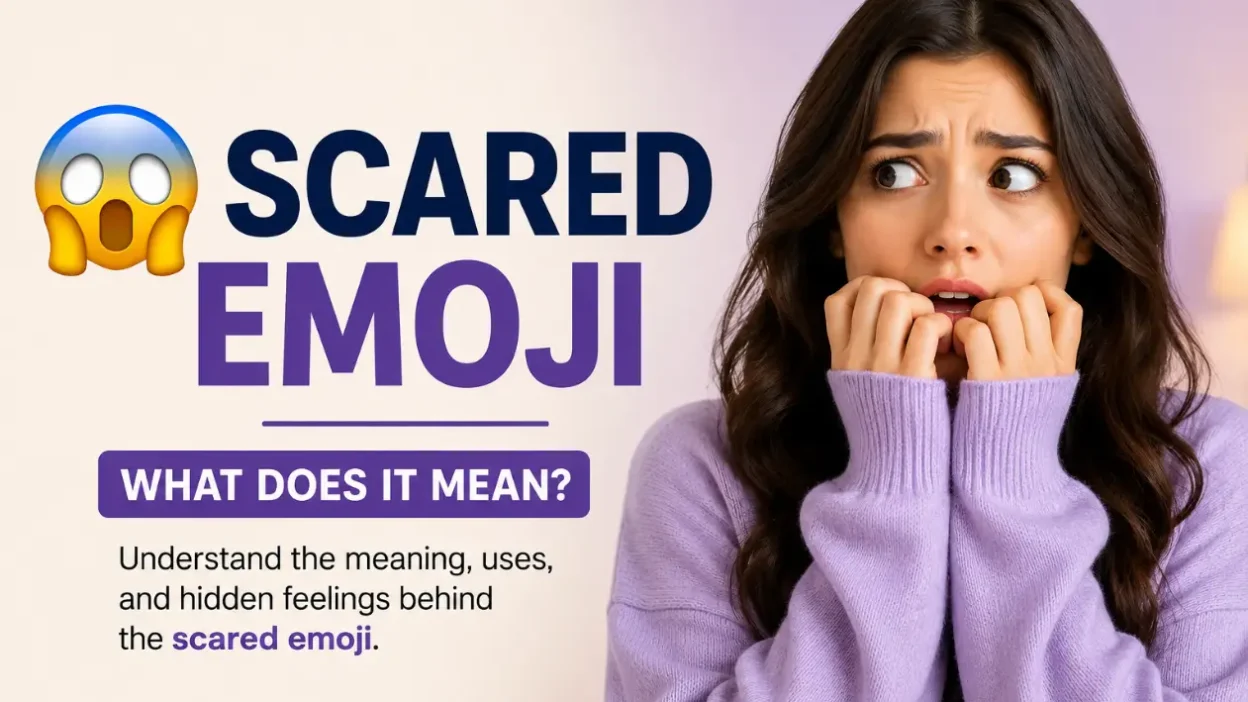
Feeling scared, shocked, nervous, or completely caught off guard? A single emoji can make that reaction much clearer.
The scared emoji usually expresses fear, worry, nervousness, shock, or panic. There are several emojis that can show these feelings, including 😨, 😱, 😰, 😧, 😦, 🫣, 🫨, and 😬.
Each one has a slightly different expression, so the best choice depends on what you are trying to say.
Context also matters because the same emoji can be serious in one message and playful or dramatic in another.
The right scared emoji can turn a simple reaction into a whole emotion.
What Does the Scared Emoji Mean?
The scared emoji is generally used to show that something feels frightening, alarming, stressful, shocking, or overwhelming. It can describe real fear, but people also use scared emojis when joking, reacting to memes, or exaggerating a surprising situation.
For example, 😨 is a natural choice for ordinary fear or concern, while 😱 usually shows a much stronger reaction. 😰 often adds nervousness or anxiety, and 🫣 can show that you are afraid to look but still want to see what happens. These meanings are not fixed rules, so the words around the emoji are important.
| Emoji | Common meaning | Possible interpretation | Best used when |
|---|---|---|---|
| 😨 | Fear or alarm | “That scared me” | Something feels frightening |
| 😱 | Extreme fear or shock | Dramatic panic | Something is very scary or surprising |
| 😰 | Anxiety or nervousness | Worried or stressed | You are nervous about something |
| 😧 | Distress or concern | Something feels wrong | You are alarmed or troubled |
| 😦 | Shock or concern | “Oh no!” | Something unexpected happens |
| 🫣 | Nervousness or fear | Too scared to look | You want to look away but still peek |
| 🫨 | Strong shock or shaking | Overwhelmed or stunned | Something feels intense |
| 😬 | Awkwardness or nervousness | Uneasy reaction | A situation feels uncomfortable |
😨 Fearful Face
Meaning: Fear, alarm, shock, or concern.
Example 1: I heard something downstairs 😨
Example 2: That movie was way too scary 😨
😨 is one of the clearest choices when you simply want to say that you are scared. It is intended to represent fear, although it can also express shock, sadness, upset, or other strong emotions depending on context.
😱 Face Screaming in Fear
Meaning: Extreme fear, panic, shock, or a very dramatic reaction.
Example 1: You scared me so bad 😱
Example 2: I thought I lost my phone 😱
😱 is usually stronger and more dramatic than 😨. It can also be used playfully when something is extremely surprising or unbelievable.
😰 Anxious Face with Sweat
Meaning: Anxiety, worry, nervousness, fear, or stress.
Example 1: My exam starts in five minutes 😰
Example 2: I hope everything goes okay 😰
The 😰 emoji is especially useful when fear is mixed with nervousness. Its meaning can also include sadness or disappointment, so the surrounding message helps explain the emotion.
😧 Anguished Face
Meaning: Distress, concern, alarm, or an uneasy reaction.
Example 1: Wait, what happened?! 😧
Example 2: You didn’t tell me that 😧
😧 can show that something feels wrong without necessarily expressing extreme fear.
😦 Frowning Face with Open Mouth
Meaning: Concern, surprise, or discomfort.
Example 1: You actually did that? 😦
Example 2: That’s not what I expected 😦
This emoji works well for an “Oh no” reaction when you are surprised or concerned.
🫣 Face with Peeking Eye
Meaning: Nervousness, fear, embarrassment, or wanting to look while also wanting to hide.
Example 1: I’m scared to check my results 🫣
Example 2: I don’t want to see what happens 🫣
🫣 is especially useful for moments when something is frightening, embarrassing, or uncomfortable but you cannot stop yourself from looking.
🫨 Shaking Face
Meaning: Strong shock, fear, disbelief, confusion, or emotional overwhelm.
Example 1: That jump scare got me 🫨
Example 2: What did I just watch?! 🫨
🫨 can communicate a stronger physical or emotional reaction, especially when something leaves you stunned or shaken.
😬 Grimacing Face
Meaning: Nervousness, awkwardness, embarrassment, or discomfort.
Example 1: I forgot to send the email 😬
Example 2: That was awkward 😬
The 😬 emoji is not always a scared emoji. It is often better for an uncomfortable or nervous situation, especially when you feel uneasy about what might happen next.
What Does This 😱 Emoji Mean?
The 😱 emoji usually means extreme fear, panic, shock, or a dramatic reaction. It is often used when something feels much more intense than a normal surprise.
In texting, however, 😱 does not always mean that someone is literally terrified. For example, “You ate the whole cake?! 😱” can be playful rather than serious.
What Does the 😰 Mean?
The 😰 emoji commonly means nervousness, anxiety, worry, fear, or stress. It is a good choice when you are concerned about something that is happening or about to happen.
For example, “I have to talk in front of everyone tomorrow 😰” shows nervousness more clearly than extreme panic.
What Does 😨 Mean From a Girl?
When a girl sends 😨, it usually means that she feels scared, shocked, worried, or concerned about something in the conversation. It does not automatically have a romantic meaning.
For example, if you tell her a scary story and she replies “😨,” she is most likely reacting to the story. Always look at her words and the situation instead of assuming that one emoji reveals how she feels about you.
What Is the Meaning of 😬?
The 😬 emoji usually expresses awkwardness, nervousness, embarrassment, tension, or discomfort. It can be useful when you know something is uncomfortable but do not know how to respond.
For example, if someone says, “I accidentally sent that message to my boss 😬,” the emoji shows an uneasy or embarrassed reaction.
How to Use the Scared Emoji in Texts and Social Media
Scared emojis work best when they match the tone of the message. You can put one at the end of a sentence, use it as a reaction, or combine two related emojis for a stronger effect.
On WhatsApp, scared emojis are useful in personal conversations, reactions, status updates, and group chats.
- “Did you hear that noise? 😨”
- “Don’t tell me the ending 😱”
- “I’m so nervous about tomorrow 😰”
- “I’m scared to open the message 🫣”
A simple emoji can make a short WhatsApp reply feel more emotional without adding extra words.
On Instagram, scared emojis can appear in comments, Stories, captions, and reactions. Someone might comment “That ending 😱” on a surprising video or use 🫣 when reacting to an awkward or embarrassing moment.
TikTok
TikTok comments often use emojis as quick reactions to unexpected, funny, creepy, or dramatic videos. 😱, 😨, 🫨, and 🫣 can all work when the video creates a strong emotional reaction.
Simple Dos and Don’ts
Do:
- Match the emoji to the feeling you want to express.
- Consider your relationship with the person.
- Add words when the emoji could be misunderstood.
Don’t:
- Assume everyone interprets an emoji in exactly the same way.
- Use several emojis when one communicates the reaction clearly.
- Assume 😲 or 😬 always means fear.
Scared Emoji Copy and Paste
Looking for a scared emoji copy and paste? You can copy these directly:
😨 😱 😰 😧 😦 🫣 🫨 😬
You can paste them into WhatsApp messages, Instagram comments, TikTok captions, texts, or social media posts. Choose the emoji that best matches the type of fear, worry, shock, or nervousness you want to express.
Scared Emoji Drawing and Text
A scared emoji drawing often uses wide eyes, raised eyebrows, an open mouth, or a worried expression to make fear easy to recognize. These simple visual features help communicate an emotion without using words.
You can also use scared emoji text in short messages:
😱 OMG!
😨 What was that?!
😰 I’m so nervous right now.
🫣 I’m scared to look.
😬 This is awkward.
These short combinations work well in chats, comments, captions, and reactions.
Scared Emoji Meme
A scared emoji meme can make fear look funny, dramatic, or exaggerated. 😱 and 😨 are especially useful when reacting to unexpected situations, creepy moments, awkward experiences, or something that seems unbelievably shocking.
For example:
When the teacher says, “Pick a partner.” 😱
The emoji does not necessarily mean real fear. It simply makes the reaction more dramatic and humorous.
Scared Emoji With Hands
If you are looking for a scared emoji with hands, 🫣 is one of the closest matches. It shows a face covering its eyes with its hands while peeking through the fingers.
It can express the feeling of being scared to look, embarrassed, uncomfortable, or curious about something that you probably should not watch.
Examples:
I don’t want to see the results 🫣
I’m scared to watch the ending 🫣
Best Scared Emoji Combos — Copy & Paste
😨😱 — A strong reaction to something scary.
😰🫣 — Nervous and afraid to find out what happens.
😱🫨 — Extreme shock, fear, or panic.
😨🫣 — Scared but still curious.
😰😨 — Worried and genuinely concerned.
😲😨 — Shocked by something alarming.
😱😲 — Extremely surprised or stunned.
🫣😰 — Nervous about looking at something.
😧😨 — Concerned because something feels wrong.
😦😲 — Shocked and unsure how to react.
😨🫨 — A strong, overwhelming reaction.
😱🫣 — Too scared to look but still curious.
Why Do Scared Emojis Look Different on iPhone and Android?
The scared emoji on iPhone can look slightly different from the same emoji on Android, Windows, Samsung, or another platform. Different companies create their own artwork for Unicode emoji characters.
The underlying Unicode character can remain the same even when the visual design changes. Unicode’s emoji standards provide the characters and data, while platforms use their own designs to display them.
Because of these design differences, an emoji may look slightly more worried, dramatic, or surprised on one device than another. That does not automatically mean its basic meaning has changed.
Trending Scared Emojis in 2026
There is no reliable universal ranking that makes one scared emoji the “most popular” in 2026. However, emojis such as 😨, 😱, 😰, and 🫣 remain useful because they cover different shades of fear, anxiety, shock, and nervousness.
| Emoji | Current usage | Common context | Platform |
|---|---|---|---|
| 😨 | Straightforward fear or alarm | Texts and reactions | WhatsApp, Instagram, TikTok |
| 😱 | Dramatic fear or shock | Memes and video reactions | TikTok, Instagram |
| 😰 | Nervousness and anxiety | Stressful situations | Texting and social media |
| 🫣 | Nervous curiosity or fear | Awkward or scary reactions | Social media and texting |
Unicode’s Emoji 17.0 charts show that the standardized emoji set continues to develop, with new emoji added over time.
The bigger trend is not simply using more emojis. People increasingly choose emojis based on the exact feeling they want to add to a message, whether that feeling is serious fear, playful panic, awkwardness, or surprise.
Frequently Asked Questions
What does the 😱 emoji mean?
The 😱 emoji usually means extreme fear, panic, shock, or a dramatic reaction. It can also be used playfully when something is surprising or unbelievable.
What does the 😰 emoji mean?
😰 commonly expresses anxiety, nervousness, worry, fear, or stress. It often fits situations where someone feels uneasy about something that is happening or about to happen.
What does 😨 mean from a girl?
When a girl sends 😨, it usually shows fear, concern, alarm, or shock about something in the conversation. The emoji alone does not indicate romantic interest, so the surrounding message and situation matter.
What is the meaning of 😬?
😬 usually means nervousness, awkwardness, embarrassment, discomfort, or an uneasy reaction. It is often used when something feels uncomfortable rather than truly frightening.
Is 🫣 a scared emoji?
Yes, 🫣 can be used to show fear or nervousness, especially when someone wants to look away but is still curious enough to peek. It can also express embarrassment or discomfort.
Why does the same scared emoji look different on different phones?
Different platforms use different artwork to display Unicode emoji. As a result, the same emoji can have small visual differences on iPhone, Android, Samsung, Windows, and other devices.
Conclusion
The scared emoji family gives you several ways to express fear, anxiety, shock, nervousness, and uncomfortable reactions.
😨 works well for straightforward fear, 😱 adds dramatic intensity, 😰 shows worry or nervousness, 🫣 can express fear of looking, and 😬 is useful for awkward situations.
The best choice depends on your message and the context. When in doubt, use the emoji that matches the feeling you actually want your reader to understand.