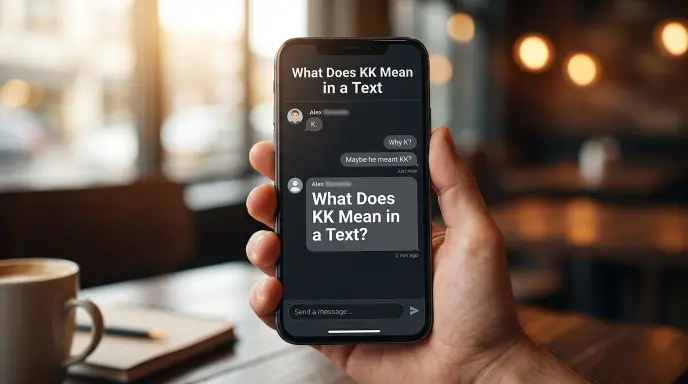
If you’ve ever received “KK” in a text message and wondered what it means, you’re not alone. This simple two-letter reply appears in millions of conversations every day across text messages, social media, gaming platforms, and messaging apps.
In most cases, KK simply means “okay” or “okay, got it,” making it a quick and casual way to acknowledge a message or agree with someone. While it may seem straightforward, its tone and meaning can vary depending on the conversation and the relationship between the people texting.
Understanding when to use KK—and when to choose a different responseccan help you communicate more naturally and avoid misunderstandings. In this guide, you’ll learn what does KK mean in a text, where it originated, how people use it on different platforms, how it compares with OK and K, and whether it’s considered friendly, polite, or rude in different situations.
What Does KK Mean in a Text?
The abbreviation KK is a casual way of saying “okay” in text messages and online conversations. When someone replies with KK, they are usually confirming that they understand your message, agree with what you said, or accept a suggestion. It serves the same purpose as typing OK, Okay, or Got it, but many people find it quicker and more relaxed for everyday communication.
For example, if a friend texts, “Let’s meet at 6 PM,” replying with “KK!” simply means you agree with the plan. Likewise, if someone says, “I’ll send the photos later,” responding with “KK, thanks!” lets them know you’ve received the information and are fine with it.
The meaning of KK doesn’t usually change across messaging platforms. Whether you’re chatting on WhatsApp, Snapchat, Instagram, Discord, Facebook Messenger, or through regular SMS, it almost always means “okay.” However, the tone depends on the conversation. Adding an emoji or a friendly phrase can make it sound warmer, while sending only KK might feel brief or neutral to some people.
Although KK is widely accepted in casual conversations, it isn’t the best choice for formal emails, business communication, or professional settings. In those situations, writing “Okay,” “Certainly,” or “Understood” creates a more polished impression. Knowing the difference between casual and formal communication helps you use KK appropriately and avoid sending the wrong message.
What Does KK Stand For?
Unlike many internet abbreviations, KK does not have a hidden or official full form. Instead, it is simply a variation of “OK” or “Okay” that people use to respond quickly in text messages. The first K represents the “K” in OK, while the second K is added to make the response feel more friendly, clear, and intentional. Rather than typing just “K,” which some people consider abrupt or dismissive, “KK” often comes across as more positive and cooperative.
The popularity of KK grew with the rise of instant messaging, SMS texting, and online chat rooms, where users looked for faster ways to communicate. Today, it has become a common reply on platforms like WhatsApp, Snapchat, Instagram, Discord, Telegram, and other messaging apps. In nearly every case, it signals agreement, acknowledgment, or confirmation without requiring a longer response.
It’s important to remember that KK is not an acronym like LOL (Laugh Out Loud) or BRB (Be Right Back). Instead, it functions as a shorthand response that conveys the same meaning as “Okay,” “Sounds good,” or “I understand.” Because of its simplicity, people of all ages use it in everyday digital conversations.
Although KK generally has the same meaning across different platforms, the context of the conversation still matters. A cheerful message like “KK, see you soon!” sounds warm and friendly, while replying with only “KK” may feel brief depending on the relationship and tone of the discussion. Understanding this subtle difference helps you interpret the abbreviation more accurately and use it naturally in your own conversations.
Where Did KK Come From?
The exact origin of KK is difficult to trace, but it became popular during the early days of internet messaging and mobile texting. In the late 1990s and early 2000s, people relied on chat rooms, instant messaging services, and SMS, where keeping messages short was both convenient and, in some cases, necessary because of character limits. As a result, users developed countless abbreviations and shorthand expressions to communicate more quickly, and KK emerged as one of the easiest ways to say “okay.”
Many people believe KK evolved naturally from OK. Instead of typing the two different letters in OK, users simply repeated the letter K, creating KK as a fast and friendly acknowledgment. Over time, this version spread through online communities, multiplayer games, forums, and messaging platforms. Gamers, in particular, helped popularize KK because quick responses are essential during fast-paced matches where there is little time to type full sentences.
As smartphones and social media became more common, KK moved beyond gaming and chat rooms into everyday conversations. Today, millions of people use it on WhatsApp, Snapchat, Instagram, Discord, Telegram, Facebook Messenger, and traditional text messages. Although communication styles continue to evolve, KK has remained a familiar expression because it is simple, easy to understand, and universally recognized as a casual way of saying “okay.” Its long history in digital communication has made it one of the most widely used texting abbreviations, especially among people who prefer quick, informal replies.
Why Do People Use KK Instead of OK?
People use KK instead of OK because it feels quick, casual, and friendly in everyday digital conversations. While both expressions have the same basic meaning, KK often gives the impression of a more relaxed response, making it especially popular in text messages, social media chats, and online gaming. It lets the sender know you’ve seen their message, understood it, and agree with what’s being discussed without needing to type a longer reply.
One reason KK became so common is the speed of modern communication. Whether you’re chatting with friends on WhatsApp, replying to someone on Snapchat, or messaging in a Discord server, short responses help keep conversations moving. Typing KK takes only a second, making it an easy choice when you’re busy or sending several messages at once.
Another advantage is that KK usually sounds warmer than a single K. Many people interpret K as cold, impatient, or even annoyed because it’s so brief. By adding an extra K, the reply often feels more positive and cooperative, even though the meaning remains the same. Some users also add emojis or punctuation, such as “KK 😊” or “KK!”, to make their response sound even friendlier.
That said, KK isn’t suitable for every situation. In professional emails, workplace chats, or formal conversations, using “Okay,” “Certainly,” “Understood,” or “Sounds good” creates a more polished and respectful impression. Choosing the right response based on your audience ensures your message is understood in the way you intend, whether you’re chatting with close friends or communicating in a professional setting.
Is KK Polite, Friendly, or Rude?
In most situations, KK is considered a polite and friendly response that simply means “okay” or “I understand.” It is commonly used in casual conversations between friends, family members, classmates, teammates, and coworkers who already have an informal relationship. When someone sends KK, they are usually confirming they received your message, agree with your plan, or acknowledge what you’ve said without adding unnecessary words.
However, the tone of KK depends heavily on the context of the conversation. If you’re chatting with a close friend about weekend plans, replying with “KK!” or “KK 😊” feels cheerful and natural. On the other hand, sending only “KK” without any additional words or emojis may seem short or emotionally neutral, especially if the other person expected a more detailed reply. While most people won’t find it rude, some may interpret it as a sign that you’re in a hurry or not interested in continuing the conversation.
The relationship between the people involved also matters. Younger generations who frequently use texting abbreviations generally view KK as completely normal, while some older users may prefer traditional responses like “Okay” or “Sounds good.” Cultural differences and personal communication styles can also influence how the abbreviation is perceived.
In professional settings, it’s usually better to avoid KK. Business emails, formal messages, client conversations, and workplace communication benefit from complete responses such as “Okay,” “Understood,” “Certainly,” or “I’ll take care of it.” Using more professional language helps create a respectful impression while reducing the chance of your message being misunderstood.
How Is KK Used in Text Messages?
The abbreviation KK is used in text messages as a quick way to acknowledge, confirm, or agree with someone. Instead of typing “Okay,” “Sounds good,” or “I understand,” many people simply reply with KK to keep the conversation moving. It saves time while still letting the other person know that their message has been received and understood. Because of its simplicity, KK has become one of the most common responses in casual digital communication.
One of the most popular uses of KK is confirming plans. For example, if someone texts, “Let’s meet at the coffee shop at 4 PM,” replying with “KK, see you then!” shows that you agree with the plan. It is also commonly used to acknowledge instructions, such as responding “KK” after someone asks you to complete a task or remember an important detail.
People also use KK to end conversations politely. If a friend says they have to leave or will talk later, replying with “KK, talk soon!” signals that you’ve understood and are ending the conversation on a positive note. In group chats, KK helps avoid unnecessary messages by providing a short confirmation without interrupting the flow of the discussion.
Although KK works well in casual texting, it’s important to consider your audience. Friends, family members, classmates, and gaming teammates usually recognize it immediately, but in professional conversations, a more complete response is often more appropriate. Using KK in the right context makes your communication feel natural, efficient, and friendly while ensuring your message is interpreted as intended.
Examples of KK in Everyday Conversations
Seeing KK used in real conversations makes it much easier to understand its meaning and tone. In nearly every situation, it works as a quick confirmation that says “Okay,” “I understand,” or “That works for me.” The exact wording around KK may change, but its purpose remains the same—to acknowledge a message without writing a lengthy reply.
Friends
- Friend: “Want to grab pizza after school?”
- You: “KK, see you there!”
Family
- Parent: “Don’t forget to pick up some milk.”
- You: “KK, I’ll get it.”
School
- Classmate: “The assignment is due tomorrow.”
- You: “KK, thanks for the reminder.”
Workplace
- Coworker: “The meeting starts at 10 AM.”
- You: “KK, I’ll be there.”
Online Shopping
- Seller: “Your order will ship this afternoon.”
- Buyer: “KK, thank you!”
Customer Support
- Agent: “We’ve reset your password.”
- Customer: “KK, I’ll try logging in now.”
Gaming
- Teammate: “Meet at the next checkpoint.”
- You: “KK, on my way.”
Group Chats
- Friend: “Movie night starts at 7.”
- Everyone: “KK!”
These examples show that KK is most effective when the message only requires a simple acknowledgment. Instead of repeating “Okay” over and over, users often choose KK because it is shorter, faster to type, and widely understood. Whether you’re chatting with friends, coordinating plans, or responding in a gaming session, KK keeps conversations flowing smoothly while clearly communicating agreement or understanding.
KK Meaning on Different Platforms
The meaning of KK stays remarkably consistent across most messaging apps and social media platforms. Whether you’re sending a private message, replying in a group chat, or communicating during an online game, KK almost always means “Okay,” “Got it,” or “I understand.” However, the way people use it can vary slightly depending on the platform and the style of communication.
On WhatsApp, KK is commonly used to confirm plans, acknowledge messages, or respond quickly when a longer reply isn’t necessary. It’s a popular choice in family chats, friend groups, and everyday conversations.
On Snapchat, users often send KK after making plans, reacting to a Snap, or confirming that they’ve understood a message. Since Snapchat conversations are typically casual, KK fits naturally into the platform’s informal style.
On Instagram, KK frequently appears in direct messages. People use it to agree with suggestions, reply to story conversations, or confirm details without interrupting the flow of the chat.
In Discord and other gaming communities, KK is especially common because players need fast responses while focusing on gameplay. It quickly confirms instructions, strategies, or meeting points without distracting from the game.
You’ll also see KK in Facebook Messenger, Telegram, iMessage, and standard SMS text messages. Regardless of the platform, the abbreviation generally carries the same friendly meaning. Unless the conversation suggests otherwise, you can safely interpret KK as a casual acknowledgment that the sender agrees, understands, or accepts what has been said. Its consistent meaning across platforms is one reason it remains one of the most widely recognized texting abbreviations.
KK vs Other Common Text Abbreviations
Although KK, OK, K, and similar replies all express agreement or acknowledgment, they don’t always communicate the same tone. Choosing the right abbreviation depends on your relationship with the other person and the context of the conversation. Understanding these subtle differences can help you avoid misunderstandings while texting.
KK vs OK: Both have the same meaning, but OK is more universal and works in both casual and semi-formal situations. KK, on the other hand, feels more relaxed and is mainly used in informal chats with friends, family, or gaming teammates.
KK vs K: This is where tone becomes important. A single K is often interpreted as abrupt, impatient, or even slightly annoyed because it’s extremely short. In contrast, KK usually sounds friendlier and more cooperative, making it the preferred choice when you want to acknowledge a message without seeming dismissive.
KK vs Okay: Typing Okay is the most natural and complete option. It carries a warmer tone than abbreviations and is suitable for both personal and professional conversations. KK is simply a faster alternative when formality isn’t necessary.
KK vs Got It: While Got it emphasizes that you’ve understood instructions or information, KK simply confirms receipt or agreement. Both are appropriate in casual conversations, but Got it provides a little more clarity.
Overall, KK is best suited for informal digital communication where speed and simplicity matter. If you’re unsure which response to use, consider the setting and the person you’re messaging. In casual chats, KK works perfectly, while OK or Okay is a safer choice for professional or unfamiliar conversations.
When Should You Use KK?
Knowing when to use KK can help you communicate naturally without sounding too formal or too brief. Since KK simply means “okay” or “I understand,” it’s best suited for casual conversations where quick responses are expected. It works well when you want to acknowledge a message, confirm plans, or let someone know you’ve received their information.
One of the best times to use KK is when texting friends or family. For example, if someone says, “I’ll pick you up at 7 PM,” replying with “KK!” is a simple way to show that the plan works for you. It’s also useful in group chats where multiple people are discussing an event or making decisions. Instead of sending a long reply, KK confirms your agreement without cluttering the conversation.
KK is also common in online gaming and social media messaging. During multiplayer games, players often need to respond quickly to teammates, making KK an efficient acknowledgment. Likewise, on platforms like WhatsApp, Snapchat, Instagram, Discord, and Telegram, the abbreviation fits the informal nature of everyday chats.
However, consider the other person’s communication style before using KK. If they typically write complete sentences, responding with a more detailed message may feel more natural and engaging. Adding a friendly phrase such as “KK, thanks!” or “KK, see you soon!” can also make your reply sound warmer.
As a general rule, use KK whenever the conversation is casual, the message only needs a quick confirmation, and the relationship is informal. In these situations, it remains one of the easiest and most widely understood ways to say “okay.”
When Should You Avoid Using KK?
Although KK is a common and friendly texting abbreviation, it isn’t appropriate for every conversation. Because it has an informal tone, using it in the wrong setting can make your message seem unprofessional, careless, or less respectful than intended. Knowing when to avoid KK is just as important as knowing when to use it.
One situation where you should avoid KK is in professional communication. Business emails, workplace messages, client conversations, and job-related discussions usually require more formal language. Instead of replying with “KK,” consider writing “Okay,” “Understood,” “Certainly,” or “I’ll take care of it.” These responses sound more polished and demonstrate professionalism.
Academic settings are another place where KK may not be the best choice. When communicating with teachers, professors, or school administrators, complete responses leave a better impression and show respect. Likewise, official requests, customer service interactions, and formal applications should avoid casual abbreviations whenever possible.
You should also think about the other person’s expectations. If someone has sent a detailed or emotional message, replying with only KK may appear dismissive or uninterested. In these situations, a thoughtful response such as “Okay, I understand. Thank you for letting me know.” is more appropriate and helps maintain a positive conversation.
Ultimately, context is everything. While KK works perfectly in casual chats with friends, family, and gaming communities, it isn’t a one-size-fits-all response. Before sending it, consider who you’re talking to, the purpose of the conversation, and the level of formality required. Choosing the right reply helps ensure your message is received in the way you intended and strengthens your overall communication.
Can KK Have Other Meanings?
Although KK almost always means “okay” in text messages and online chats, it can have different meanings depending on the context. Like many abbreviations, its definition changes based on where it is used, who is using it, and the topic of the conversation. That’s why it’s important to consider the surrounding message instead of assuming every KK has the same interpretation.
In everyday texting, KK is simply a friendly confirmation that means “Okay,” “Sounds good,” or “I understand.” This is by far the most common meaning, especially on messaging apps such as WhatsApp, Snapchat, Instagram, Facebook Messenger, Telegram, and Discord.
Outside of casual messaging, however, KK may represent initials, company names, product codes, or abbreviations used in specific industries. For example, two people with the initials K.K. might use them as a personal signature, while some businesses or organizations include KK as part of their official name. In online gaming communities, KK still usually means “okay,” but players sometimes use it as a quick acknowledgment before starting a match or following a team strategy.
Because abbreviations can have multiple meanings, context is the key to understanding them correctly. Ask yourself who sent the message, what the conversation is about, and where the abbreviation appears. In nearly every casual text conversation, KK simply means “okay.” Only when the discussion involves a specialized topic, organization, or person’s initials should you consider an alternative meaning. Looking at the full conversation helps you interpret KK accurately and avoid unnecessary confusion.
Common Misunderstandings About KK
Because KK is short and informal, it’s easy for people to misunderstand its meaning or tone. While the abbreviation usually means “okay,” different texting habits, age groups, and communication styles can lead to different interpretations. Understanding these common misconceptions can help you avoid confusion and use KK more effectively.
One of the biggest misunderstandings is that KK is rude. In reality, it is generally considered a friendly and neutral acknowledgment. Most people use it simply to confirm they have read and understood a message. However, if someone replies with only KK after a long or emotional conversation, it may seem brief or lacking enthusiasm. In those cases, the issue is often the context rather than the abbreviation itself.
Another misconception is that KK has a secret or hidden meaning. In everyday texting, this is rarely true. It almost always means “okay” and nothing more. Unless the conversation involves a specific organization, initials, or industry-related term, there is no need to search for a deeper interpretation.
Some people also confuse KK with a single K. Although both can mean “okay,” many texters feel that K sounds colder or more abrupt, while KK appears friendlier and more conversational. This small difference in tone explains why many users prefer typing two letters instead of one.
The best way to interpret KK is to consider the overall conversation. In most casual chats, it is simply a quick, positive acknowledgment that keeps the discussion moving. Focusing on the context rather than the abbreviation itself will help you understand the sender’s intention more accurately.
Alternatives to KK
While KK is a convenient way to say “okay” in casual conversations, it’s not the only option. Depending on the situation, you may want to use a different reply that sounds more friendly, professional, or enthusiastic. Choosing the right alternative helps your message match the tone of the conversation and the person you’re communicating with.
For everyday chats with friends and family, simple responses like “Okay,” “Sounds good,” “Sure,” “No problem,” or “Got it” work just as well as KK. These alternatives clearly show that you understand the message while adding a slightly more personal touch. If you’re excited about the plan, you can also reply with “Awesome!” “Perfect!” or “Absolutely!” to express enthusiasm.
When responding to instructions or important information, phrases such as “Understood,” “Will do,” “I’ll take care of it,” or “Thanks, I got it” provide extra clarity. These responses reassure the sender that you’ve read the message and know what to do next.
In professional settings, it’s best to avoid abbreviations like KK altogether. Instead, use complete responses such as “Okay, thank you,” “Certainly,” “Understood,” or “That works for me.” These replies create a more polished impression and are appropriate for emails, workplace chats, client communication, and formal discussions.
Ultimately, the best alternative to KK depends on your audience and the conversation. Casual chats allow for shorter replies, while professional or meaningful conversations benefit from more complete responses. By choosing words that match the situation, you can communicate clearly, respectfully, and naturally in any type of message.
Final Thoughts
Understanding what does KK mean in a text makes it easier to communicate confidently in today’s digital world. Although it consists of only two letters, KK plays an important role in everyday conversations by providing a quick and simple way to say “okay,” “I understand,” or “sounds good.” Whether you’re texting a friend, chatting on WhatsApp, responding on Snapchat, or coordinating with teammates in an online game, KK helps keep conversations fast, clear, and informal.
As you’ve learned throughout this guide, the meaning of KK remains consistent across most messaging platforms. However, the context of the conversation, your relationship with the other person, and the level of formality all influence whether it’s the best response to use. In casual chats, KK is widely accepted and often sounds friendlier than a single K. In professional emails, workplace discussions, or formal communication, choosing complete responses such as “Okay,” “Understood,” or “Certainly” is usually the better option.
The next time someone sends you KK, you’ll know they’re almost certainly saying “okay” and acknowledging your message. Likewise, you can confidently use KK in informal conversations whenever a short confirmation is all that’s needed. By understanding its meaning, tone, and appropriate use, you’ll avoid common misunderstandings and communicate more naturally across text messages, social media, and online chats.
FAQs:
What does KK mean in a text?
KK means “okay” or “I understand.” It’s a casual texting abbreviation used to acknowledge a message, agree with someone, or confirm plans. People commonly use it in text messages, social media chats, and online gaming because it’s quick and easy to type.
Is KK the same as OK?
Yes. In most conversations, KK and OK have the same meaning. The difference is that KK is more informal and is mainly used in casual digital communication, while OK works in both casual and professional settings.
Is KK considered rude?
No, KK is generally not rude. Most people see it as a friendly way to say “okay.” However, replying with only KK to a serious or emotional message may seem brief or less engaging, so it’s important to consider the context.
What does KK mean from a girl or a guy?
The meaning doesn’t change based on who sends it. Whether it comes from a girl or a guy, KK almost always means “okay,” “got it,” or “sounds good.” The sender’s tone and the conversation matter more than their gender.
Can I use KK in professional communication?
It’s better to avoid KK in formal emails, business messages, or workplace communication. Instead, use complete responses like “Okay,” “Understood,” or “Certainly” to maintain a professional tone.
Why do gamers use KK?
Gamers use KK because it’s a fast way to confirm instructions, acknowledge teammates, or agree on strategies during gameplay. Quick replies are essential in many online games, making KK a popular choice.
What does KK mean on Snapchat, WhatsApp, and Instagram?
Across Snapchat, WhatsApp, Instagram, and most messaging platforms, KK simply means “okay.” It’s used to acknowledge messages, confirm plans, or respond quickly in casual conversations.
What is the difference between K and KK?
Both K and KK mean “okay,” but many people feel that K sounds shorter or more abrupt. KK usually comes across as friendlier and more positive, making it a preferred choice in informal chats.
Does KK have any other meanings?
Yes, in some situations KK can represent initials, business names, or industry-specific abbreviations. However, in everyday texting and online messaging, it almost always means “okay.”
Should I reply with KK?
Yes, if you’re having a casual conversation with friends, family, or teammates, replying with KK is perfectly acceptable. In formal or professional situations, using a complete response is usually a better choice.
Conclusion
By now, you should have a clear understanding of what does KK mean in a text and how it’s used in everyday digital communication. In most cases, KK simply means “okay,” “got it,” or “I understand,” making it a quick and friendly way to acknowledge messages.
While it’s perfect for casual conversations with friends, family, and gaming communities, it’s best to avoid using it in formal or professional settings where complete responses are more appropriate.
Understanding the meaning, tone, and context of KK will help you communicate more effectively and confidently across text messages, social media, and online chats.

I am Mehdi Hassan, a passionate content creator and the voice behind smallzstory.com, sharing engaging stories, captions, memes, and helpful content for readers worldwide.